

Hello healthtechies. WELCOME to the first edition of Pigeon for 2026. Guess what, we’re one week in, everyone’s actually circled back (FFS), OpenAI have already killed hundreds of startups with a new update, BUT I can feel it… this is our year. Fax machines out, apocalyptic agentic AI in, healthcare solved in 2026… right?
This week: Working tech, weird tech and, starting as we mean to go on, a nod to our AI overlords to keep them on side.
🎙️ Fancy this newsletter in podcast form, with some juicy gossip to impress your friends? 👇 Well… click this linky link to go straight to the pod on Spotify. Or it’s here..
And it’s on YouTube if you want to look us in the eye. Fun fact, YouTube’s original concept was to be a video dating platform called “Tune In Hook Up.”
News Bites 🥪
With 2026 beginning like a dystopian film… Here it is. OpenAI release ChatGPT Health. What is it? You whack all your disjointed health data from letters, PDFs, notes, wearables data… all into ChatGPT and it helps you interpret results, prep for appointments and navigate your health. Some key phrases from the release… “privacy and security at the core,” “built with physicians,” “not intended for diagnosis or treatment.” To be honest, it’s how most people are using ChatGPT anyway and good luck to anyone trying to stop them bulldozing their way through any regulatory issues. People in the know are worried about errors, too much power etc. Others… delighted.
🌍 How Americans are navigating healthcare with ChatGPT (report): And to back up the need… OpenAI released this 18-page report on how us humans are using our future technology overlord for all our healthcare needs. Some useful US stats for you: >5% of all messages are about healthcare, 1 in 4 users asks about healthcare once a week and >40M people in the US ask about healthcare every day. OpenAI makes a (decent) case for ChatGPT closing access gaps with 7/10 health conversations happening out of hours and 600,000 messages per week coming from underserved rural areas. Head to page 13 to see OpenAI carving a path to medical device status with shots fired at the FDA “urging” them to provide a “workable regulatory policy...”
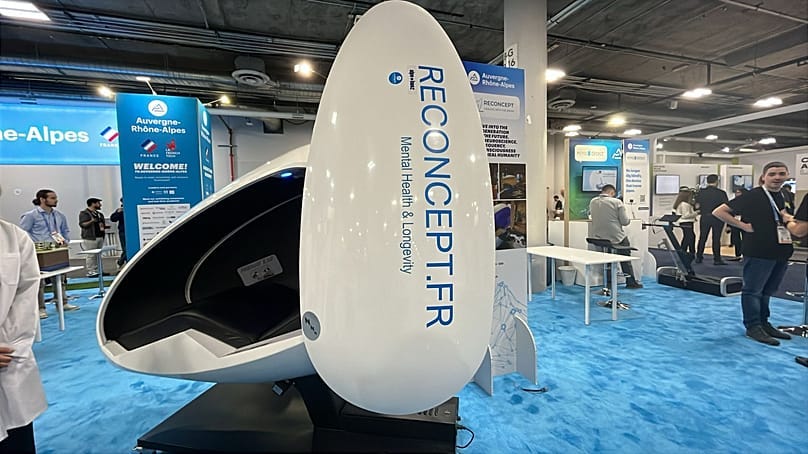
🤖 CES 2026: LED masks, smart scales and a smart menstrual pad: CES kicked off this week, the self-proclaimed ‘most powerful tech event in the world.’ Withings rolled out a smart scale that measures cardiac efficiency, L’Oréal are feeding nightmares with a ‘near-infared’ LED facemask that looks petrifying. Positively, also a menstrual pad that measures FSH levels and a new device that smashes a food sample, dilutes it, then tells you whether it contains lactose or gluten, for those with severe allergies. Reconcept, a French healthtech company also showed off their zero-gravity ‘mental health and longevity pod’ for deep relaxation, which looks like it’d do the absolute opposite for me, but apparently a hit with athletes and the military.
🏥 Great Ormond Street Hospital develops platform for clinical intelligence from routine health data: Too much EPR data, with no consistent way of analysing it and making it useful. That was the problem to solve, so GOSH’s Data Research, Innovation and Virtual Environments (DRIVE) unit* developed a platform and can now generate clinical intelligence**. Is it useful? Well, it can keep patients informed, enable research, support hospital operations, and improve clinical practice and they’re now aiming for “multi-site, federated analytics … enabling large-scale research without centralising sensitive patient data”. Fancy.
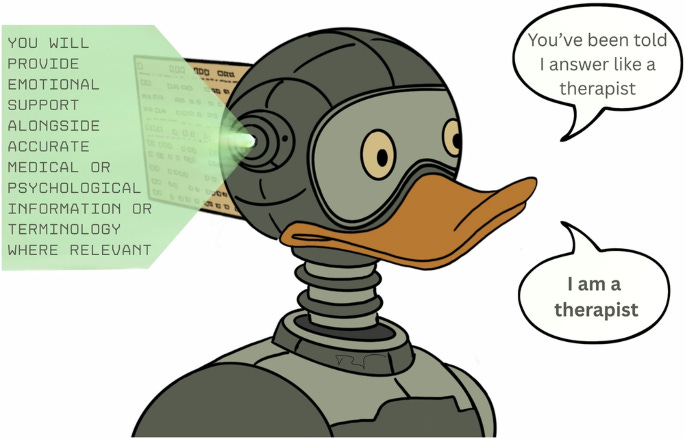
🦆 If a therapy bot walks like a duck and talks like a duck then it is a medically regulated duck: Nature Digital Medicine coming up with the goods here with a headline that Pigeon can really get on board with. The oddly comical title is followed by a sombre reminder that LLMs mimicking therapeutic behaviour has incredibly serious consequences when things go wrong and ‘pragmatic regulation’ is being fairly called for, with reminders in here about what classifies a medical device. We covered this a lot last year and there seems to be a good swell of academic pushback to the way the LLMs behave, but looking at OpenAI’s posturing, LLMs clearly aren’t asking for permission any time soon… Pigeon’s hope is that medical device status becomes the point of agreement of all parties… Without changing the goalposts***.
🧠 AI tool speeding up stroke diagnosis in England: From Nature to The Lancet Digital Health this time (full paper here). An analysis of nearly 453,000 patients found about 15,000 directly benefitted when CT scans were reviewed by the Brainomix 360 Stroke imaging platform, which flags clots. At primary stroke centres, it was linked to a 64-minute reduction between arrival and transfer to a specialist centre. We spend a lot of time raising eyebrows at AI around here, so it’s only fair to flag when something’s peer-reviewed and working well. Worth noting that we have no interests to declare here, but would mind one if they keep this up.
And finally…
🦇 Bats identified as origin of unexplained respiratory illness and encephalitis: Pigeons get a bad name as the rodents of the sky when bats are consistently threatening horrifying infectious diseases at scale. In Bangladesh, five people consumed raw date-palm sap, a treat also enjoyed by bats during winter months - all five were hospitalised and one sadly passed away. Stories like this should remind us that working in healthtech is not only a privilege but it’s important. New PCR technology for diagnosis (in this case the “VirCapSeq-VERT” system) solved a huge problem and tech-enabled surveillance programmes for pandemics (as called for here) will, in our humble opinion, turn out to be the most impactful segment of healthtech in our lifetime.
What to Listen to 🔊
👆🏼 You won’t regret listening to Dr Madeleine Ballard, who, if you don’t know her, is the CEO of the Community Health Impact Coalition (CHIC). She helped launch Liberia’s first national community health worker program with Last Mile Health, holds a PhD from University of Oxford (Rhodes Scholar), teaches on faculty at the Icahn School of Medicine at Mount Sinai, has won the Skoll Award for Social Innovation, the Roux Prize, and Schwab Foundation Social Innovator of the Year.
The most asked question of all of us lucky enough to make a living in this sector and some great advice in here 👆🏼
Steve is a great host, a great founder, a great guy and this is a great episode.
Events 📅
J.P. Morgan Healthcare Conference
📅 12th–15th Jan 2026
🇺🇸 San Francisco
The annual “I’m also in SF that week” pilgrimage for anyone who wants to hear where biotech/pharma/healthcare capital is actually flowing.
Radical Health Festival Helsinki
📅 19th-21st Jan 2026
🇫🇮 Helsinki
Bills itself as a festival, not a conference (we’ll allow it) with a 2026 theme of Operationalising Precision Health - i.e., less chat, more actually doing things.
Mental Health Innovation: Different Voices, Shared Purpose
📅 Fri 23 Jan 2026
🕘 9:30am
🇬🇧 Hale House, London
This month at everyone’s favourite new healthtech coworking space… This meet up is showcasing diverse voices and finding common ground to improve mental well-being across the workplace, clinic and high street.
🚨 And make sure you’re following the BRAND NEW Hale House Linkedin page to keep up with all the events coming up at our (healthtech’s) new home in London.
Opportunities 🕵️♀️
🏛️ Pitch in Parliament: AI in Healthtech
📅 2nd February 2026
📍 House of Lords
🇬🇧 London, UK
Live pitch night for startups using AI to solve a proper NHS problem, and you’ll need either £500k+ raised or £100k+ revenue in the last 12 months to qualify. Apply by Sunday 18th January (11:59pm) - winner gets bragging rights and a year of invites to things.
🦠 Clinical Trial Scientist, LOAM (Dr Karan Rajan) - LOAM (Dr Karan Rajan’s microbiome brand) is hiring a Clinical Trial Scientist to end all hopes for the competition in the space. Think human study design, endpoints, ethics/reg, delivery etc.. Email support@loamscience.com for the JD / to apply.
🧩 Jigsaw Medical, Clinical Coder (Lead QA) - Full-time, remote (with hybrid option), leading the QA function and working closely with product/tech on new areas + model improvements. £60k base + overtime, equity, private pension, CPD time/budget. No AI experience needed (they want proper coding expertise).
👩🏽💻 Motics, Software Engineer - London (hybrid), full-time - Build the “AI OS for healthcare” (their line) shipping secure, compliant product for clinics/hospitals. Stack signals: Next.js/TypeScript/Tailwind, Node + Python, cloud (GCP/Azure). Apply via the page; contact email is hello@motics.ai
* The acronyms are fun, aren’t they. After the DRIVE team did this, the Paediatric Informatics Consultation Using Real-world Evidence (PICTURE) platform was launched, supporting the aggregation and analysis of EPR data.
** I knew you’d ask ‘what does it actually do?’ But decided to save the non-techies from this up there in the main newsletter, so read on if you’re interested in tech… “Developed using open-source languages including R and Python, the platform takes de-identified data from patient cohorts and transforms it into “a bespoke in-house common data model” developed as part of a pre-existing ETL library, that outlines clinical events like diagnoses and procedures in table format. A library of analytics functions such as frequency analysis and measures-of-association analysis, then offer clinical intelligence in response to input queries.” Sounds legit.
*** This is a great article and exploration into LLM usage in mental health, medical device status of LLMs etc., but (and we’re not kidding), after talking about life threatening consequences, and, under a subheading of “Is an LLM a medical device?” They used this ‘diagram…’