


Hello healthtech fans.
This week: Hallucinating scribes make it to the big screen, hope for clinicians who want a life outside the hospital and… is that WALL-E scrubbing up?
🎙 Fancy this newsletter in podcast form? 👇 Well… Click this linky link to get the pod on Spotify. And it’s on the SomX YouTube channel if you like to look at people when they talk.
News Bites 🥪
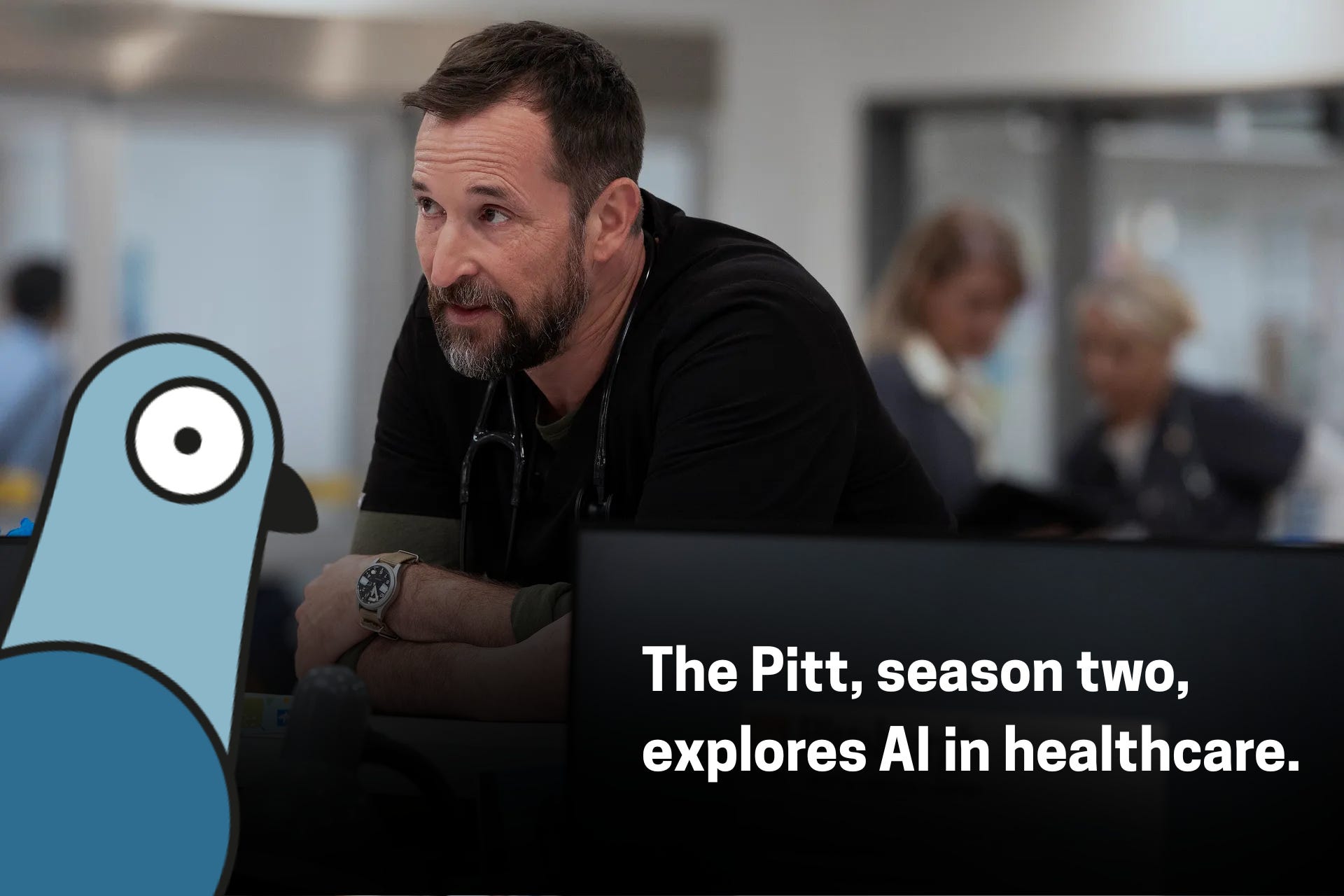
📺 How The Pitt’s AI Drama is Playing Out in Real Hospitals: HBO’s The Pitt might be fiction, but its AI storyline is feeling very close to home, shining a light on the potential issues AI scribes can cause. The story is that a shiny new AI tool promises to slash charting time, until it confidently hallucinates patient details and muddles urology with neurology. Whoops. Roughly two thirds of US doctors are already using AI in some form. Some swear by it, others are not entirely convinced. Art truly imitating life. Friend-of-Pigeon Dr Hugh Harvey also appreciated the reference and you can see a clip in his Linkedin post. Kudos to the writers. Many good conversations have been started as a result of this coverage.
🧩 Patchwork Health launches AI rostering tool for NHS clinicians: Picture this… Pigeon (a shift-working clinician) miraculously gets someone to agree to a date, but they work a normal job, so Pigeon doesn’t have a chance of ever meeting up. And to put the boot in, their hobbies are a laughable and distant memory. Enter Patchwork Health, potentially rescuing both NHS staffing and Pigeon’s love life. Their new AI powered rostering tool means clinicians (without apology) can submit their shift preferences to stop missing the big little moments. In a 10 week trial, it’s already cut unfilled shifts by 97%. We’ll take ANYTHING to improve staff experience and reduce diabolical burnout rates. See you at footy training ⚽️
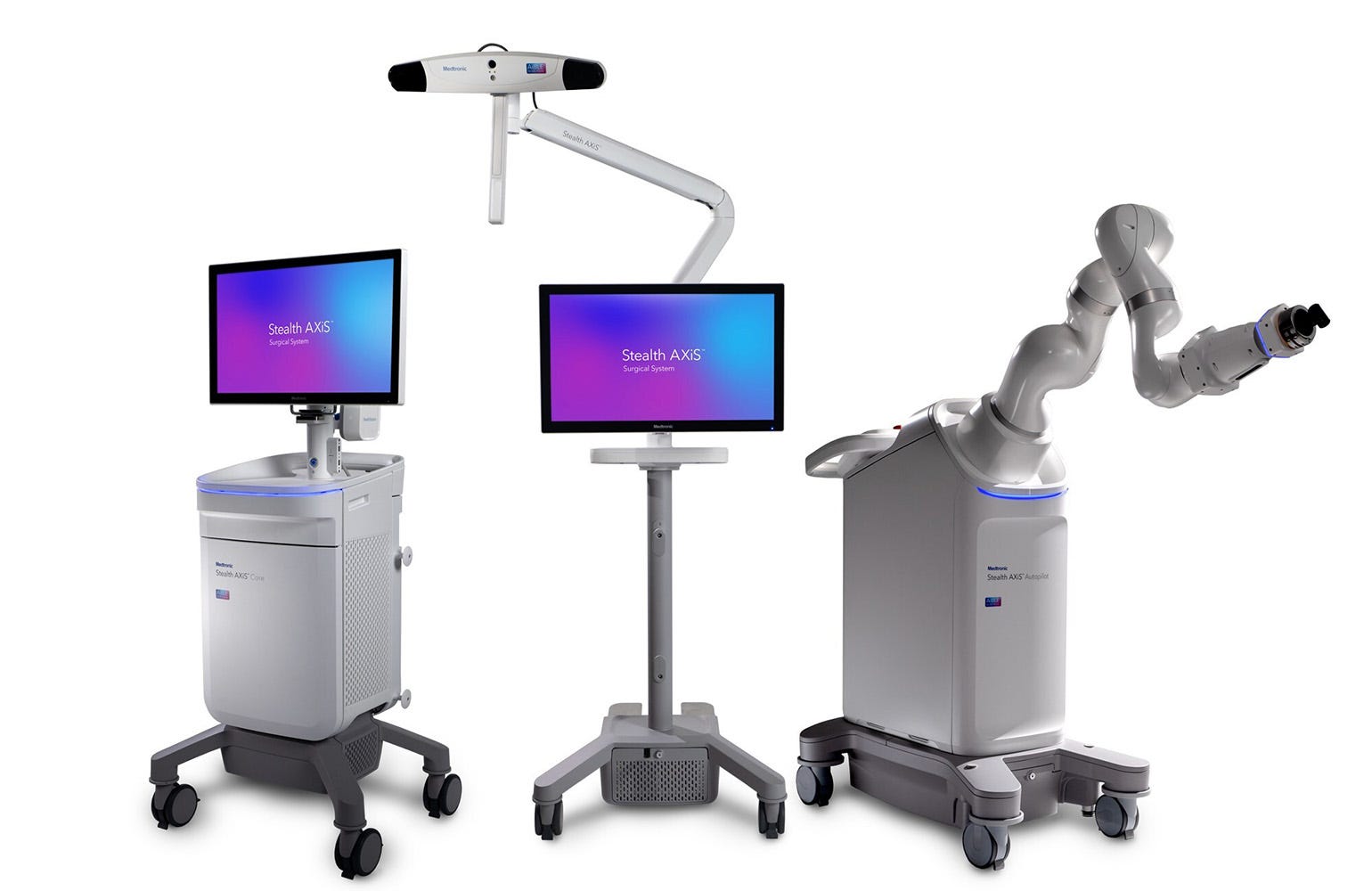
🩻 Medtronic earns FDA clearance for Stealth AXiS spinal surgery system: Medtronic has bagged FDA clearance for its Stealth AXiS system - cool name and cool phrase incoming - “a navigation and robotics platform for spinal procedures that tracks the spine’s movement in real time.” This “LiveAlign” tracking lets surgeons see anatomical shifts as they happen, so they don’t need to keep pausing for extra imaging. Fewer interruptions, more precision, and hopefully better outcomes for patients. And it looks a bit like WALL-E.
🚨CalmWave takes on intensive care alarm overload: ICU “alarm fatigue” is one of those very real, very unsexy problems that quietly wrecks staff focus and patient sleep. Pigeon’s seen a few companies try to tackle this over the years and CalmWave’s play is to stitch together monitoring data and EMR context, then (pretty sensibly tbh) recommend patient-specific alarm thresholds, with reasoning. Like the best ideas, this does create a bit of a why-don’t-we-do-this-everywhere thought. Fewer pointless beeps and more signal where it matters? Yes, please.
🇬🇧 MHRA rethinks post-Brexit device rules, are CE marks here to stay? Anyone who knows the significance of the number 27,001 should listen up. The MHRA has entered the chat, launching a consultation on whether to indefinitely recognise EU-approved (CE-marked) medical devices. A quick reminder: post-Brexit, CE-marked devices have been allowed on the GB market under transitional arrangements. Those arrangements are due to end in 2028 or 2030, depending on device class, which would affect around 90% of devices used over here, and, let’s be honest, create a sh*t load of work if they don’t do something.
TLDR - the MHRA is proposing three main changes:
Extend transitional arrangements for legacy devices
Indefinitely recognise devices compliant with the EU MDR and IVDR
Introduce an international “reliance” route for certain higher-risk devices
The consultation is open until 10 April 2026. Respond online here.
🏥 Innovate UK SMART grant means AI-enabled clinical decision support hits multiple UK sites: A tasty £300k+ morsel from Innovate UK has gone to co-design and validate an AI-powered clinical decision support (CDS) platform, MEMORI, through a multi-ward clinical deployment targeting hospital-acquired infections. The 18-month-long programme is expanding real-time data inputs, extending EPR integration (less clickedy-clicks for clinicians), and improving prediction and explainability, to build an evidence base for safe rollout of regulated AI CDS in the UK’s NHS. Sounds significantly more productive than Pigeon’s last jaunt to Exeter, which is just a blur of red chinos.
And finally…
🩺 AI could begin handling incident reports (Nature): Ah incident reporting - the cause of, and solution to, many problems for hospital staff. You know the drill. Forms get filed. Reviews get scheduled. Humans painstakingly categorise what went wrong and why, with anxieties all over the place. Vital work. But it is slow. The authors of this Nature article developed an AI-based Incident Analysis and Learning System (AI-ILS)* that, when tested on 350 real-world clinical incidents, agreed with expert reviewers 88% of the time. It also ran about 29 times faster than manual analysis. Will it speed things up? Make them better / more accurate? Reduce cognitive load? Is this AI for the sake of AI?
Tune in next week for another edition of “Thought your niche had escaped AI? Think again.”
What to Listen to 🔊
Tjaša speaks with Dale Atkinson who lives with stage 4 oesophageal cancer. He shares how he applied his compliance and investigation skills to healthcare by reading thousands of research papers, building a research-grounded AI workflow to sense-check drug interactions and pathways, and learning how to communicate with clinicians to be taken seriously.
Dr Kish from Bayer has launched a new pod at the intersection of health, tech and media (love). This episode of SundAi brunch (excellent naming decision made there), covers a regulation and compliance lovers’ favourite topics: AI in medical affairs, patient safety and governance.
Who knew that >2000 subtle acoustic features (things like pitch variation and timing patterns) can predict physiological and neurological disease and degeneration? Kang Hsu, MD, Chief Medical Officer at Canary Speech explores the emerging field of vocal biomarkers and what they could mean for earlier disease detection.**
Events 📅
HPN North 2026
📅 26th – 27th February 2026
🇬🇧 The Manchester Deansgate, Manchester
A senior-level NHS and digital health forum in Manchester bringing together system leaders and solution providers to tackle operational and transformation challenges. Expect keynotes, Dragons’ Den-style pitches and practical sessions focused on digital innovation, productivity and NHS reform.
Innovation in Women’s Health and Femtech
📅 27th February 2026
🇬🇧 Royal Society of Medicine, W1G 0AE, London, England
An obs and gynae event at the RSM spotlighting the latest clinical evidence, emerging research and real-world challenges across women’s health. Designed for healthcare professionals, innovators, and advocates, it’ll be focused updates and specialist insight for better day-to-day decision-making in women’s healthcare.
Women’s Health Horizons - London Summit
📅 10th March 2026
🇬🇧 London, England
A heavyweight London convening of clinicians, founders, investors and policymakers zeroed in on accelerating real progress in women’s health. With leaders like Julia Levy, Joyce Harper, and Dr Suzanne Steinbaum on stage, and partners spanning Organon to Women of Wearables, this is where the serious conversations on AI bias, menopause reform and device adoption will happen.
Opportunities 🕵️♀️
👷Senior QA Engineer, Daye: Fancy being the reason a women’s health platform works as intended? Daye is hiring someone to own end to end automated testing across its software as a medical device platform. This is not a clipboard and checklist situation. You’ll be in the code, building test frameworks across a Node.js and React stack, stress testing APIs and data flows, and making sure everything is safe, reliable and regulator friendly.
🥼The Frontline to Future Programme, Sanome: Sanome are building the next generation of clinical AI tools and, of course, they want them shaped by the people who actually use them. Enter The Frontline to Future Programme where Resident Doctors (FY2–ST2), Senior Nurses and Matrons are invited to become founding members to share frontline insight on workflows, decision-making and where current tools fall short.
📈 Product Manager, Activity, Oura. Oura’s hiring a Product Manager to shape the movement and workout experience behind the Oura Ring. You’ll work across data science, hardware, firmware, engineering and design to turn sensor data and research into features millions use to understand their activity and recovery. If you’re 3+ years in consumer app product management, comfortable building connected hardware-software experiences and using data to drive decisions, check it out. Remote US, strong salary plus equity, and yes, you get a ring.
* Refreshing that this doesn’t have a forced, ironic mnemonic like usual
** I think this is an important one for everyone in healthtech keep in mind. Vocal biomarker technology has the potential to reach every part of healthcare where patients speak out loud (and prevention use cases too - imagine if it was in Granola or whatever your meeting scribe is…). Feels like a frontier with a lot of potential and a long way to go (in a good way - lots of research and practical application gains available).