


Hello healthtech fans.
This week: Another consumer health AI enters the chat (yawn), but a fire breathing copilot deployed into the NHS, $440 billion left on the table and the age-old dilemma, jam first or cream?
🎙 Fancy this newsletter in podcast form? 👇 Well… Click this linky link to get the pod on Spotify. And it’s on the SomX YouTube channel if you like to look at the faces of people when they talk.
News Bites 🥪
🔍 Introducing Perplexity Health: Another week, another consumer health AI. In what’s become a standing agenda item for Healthtech Pigeon, we’re not really sure what else there is to say on this one, so we’re not going to labour it. Perplexity Health connects your Apple Health, wearables, medical records from over 1.7 million care providers, and lab results into a single interface etc., etc., etc. It’s the latest in a growing line of major AI platforms to launch a dedicated consumer health product in the last three months blah blah blah, following OpenAI, Microsoft, Amazon, Google/FitBit, Anthropic….. Stay tuned for the launch of Netflix Health next week.
🐲 From passive tools to agent factories: Manchester goes all-in on AI: Manchester University NHS Foundation Trust (MFT) has launched Microsoft’s AVT (remember that acronym from last week?) Dragon Copilot, which isn’t controlled by a Targaryen Queen, doesn’t breathe fire, but does, apparently, cut some admin task time in half, which sounds promising. If you want more details on the nuts and bolts, Microsoft’s Jacob West was on The Healthtech Podcast* talking about a shift from passive AI tools to active, orchestrated agents. MFT are now living that vision at scale with thousands of Copilot licences and the ‘Agent Factory’ that lets hospital teams design and deploy custom AI things. The big question is obviously whether those capabilities extend to fixing printers and hospital parking.
🏥 Devon puts 1.3 million patients on a single EPR: By August, the OneDevon EPR programme will have all 1.3 million people across Devon on a single, horizontally-integrated instance of Epic. Anyone who has braved the trip across the rural county on a bank holiday weekend**, will appreciate the feat - a single login and no more systems that don’t talk to each other. Royal Devon University Healthcare NHS Foundation Trust, which led the charge, was also the first trust in the UK to integrate AVT directly into an EPR, and feeds more wearable data into Epic than any other site in Europe (teacher’s pet). According to Harris, the cultural shift has been huge, with staff now instinctively asking, “can we do this digitally?” The county that puts cream on first clearly has its priorities right.***
📋 Under 50% of NHS staff receive basic EPR training: If the last story got you thinking ‘alls good in EPR land,’ think again. A Health Foundation survey of 1,725 NHS staff found that only 46% using an EPR had received basic training, 64% said EPRs had added to their workload, and 53% said it’s made their work harder. Weird that that 75% still feel EPRs improve patient care... There’s clearly faith in EPRs but the execution might not be quite there. A recent report from the BMJ Future Health Commission also backs that up. We’re asking people to work on top of decade-old systems they were never properly shown how to use, while simultaneously planning to layer AI agents and ambient voice on top. Let’s maybe fix the basics first?
🫀 This AI stethoscope is catching heart disease that rural doctors are missing: This is cool. Eko Health’s AI-powered stethoscope is flagging two to four previously undiagnosed cardiac conditions per shift at Wayne General Hospital, where obesity, hypertension, and untreated diabetes run rampant and specialist cardiology is basically nonexistent. It picks up atrial fibrillation, murmurs, and low ejection fraction in under a minute by combining digital auscultation with real-time ECG, potentially shaving weeks off diagnosis time. The best bit is that it already slots into the existing clinical workflow, so no extra clicks, no “digital transformation” deck required, AND, because it has a reimbursement code, in theory, it pays for itself, which is music to this Pigeon’s ears****. Eko CEO Connor Landgraf was on The Healthtech Podcast back in 2021 if you want the origin story.
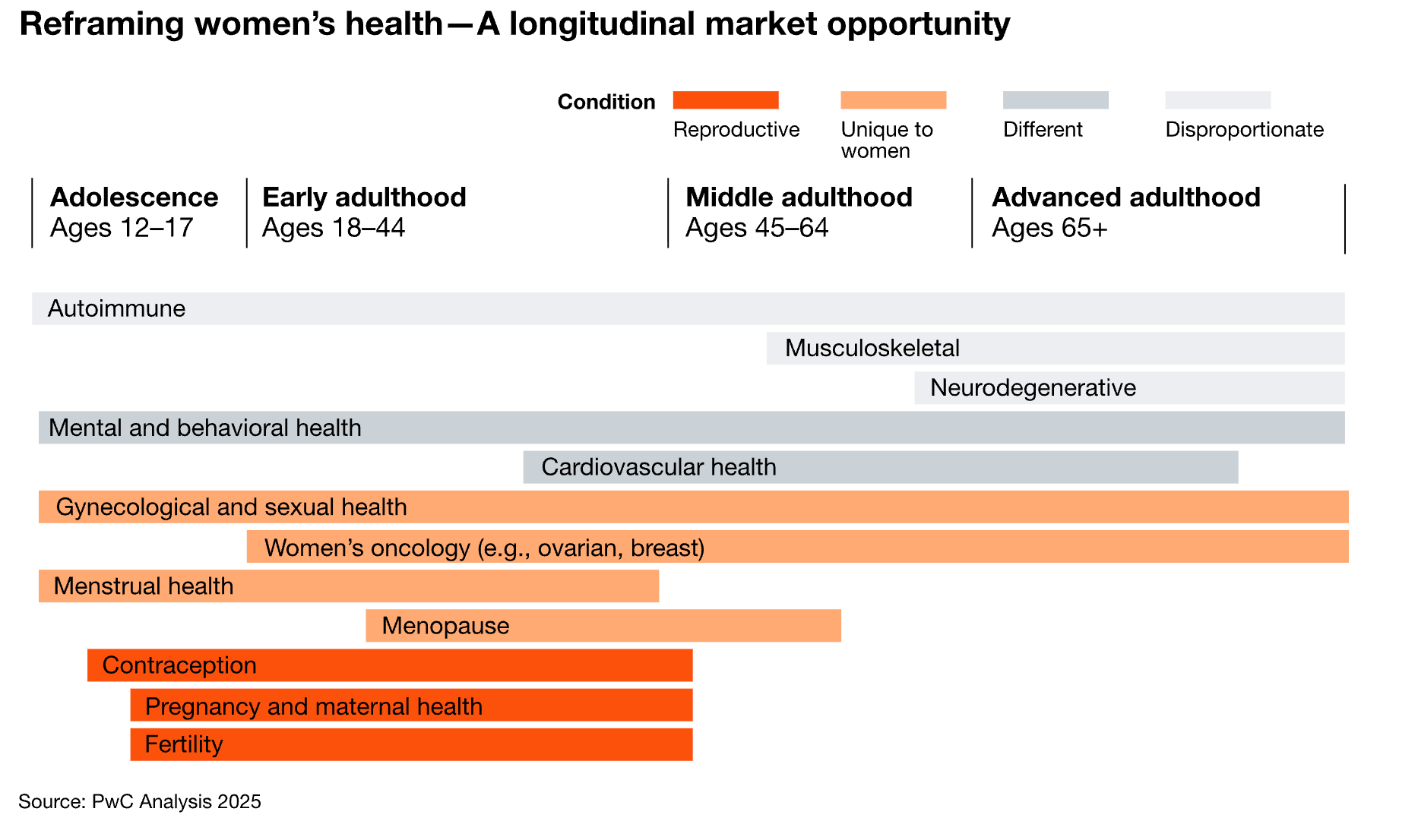
👩⚕️ From margin to mainstream: The future of women’s health: PwC have run the numbers on something we’ve been saying for a while. Women’s health is a $430–440 billion global market today, projected to hit $600 billion by 2030, and that’s probably an understatement because the projections are based on currently defined categories. The real opportunity is in the conditions that have been misdiagnosed, underfunded, or just not studied because male biology was the default. To be honest, it kind of sucks that it feels like we have to reduce women’s health to a commodity for it to get the attention it deserves, but I guess money talks. On that note, a little louder for the investors writing the cheques; your LPs (and the world) will thank you.
And finally...
🗞️Nature study: Your morning heart rate could predict your afternoon crash: New research from Mount Sinai, Yale, and Oxford published in npj Digital Medicine found that a 60-second smartphone heart rate check in the morning can predict whether long COVID and ME/CFS patients will experience a crash, fatigue flare, or brain fog later that day. They found that spikes in resting heart rate and drops in HRV were reliably followed by worsening symptoms, with prediction accuracy meaningfully beating symptom history alone. So it’s a refreshingly useful application of digital biomarkers and a tool that has the potential to help people with complex chronic illness plan their day around their biology. Actionable - that’s what we like. Bravo.
What to listen to 🔊
When James sat down with Declan Hadley, they covered everything from the evolution of healthcare technology and the importance of digitisation to the role of AI in improving patient outcomes, to lessons learned from raising a successful son in the world of Fantasy Premier League. I have many questions…(which would probably be answered by listening).
The relationship between the NHS and new technology is a tricky one to say the least. This chat between the ineffiable Annabelle and Liam delves into why so many innovations struggle to move from pilot to practice, and shares some practical insight into what it would really take for the NHS to become a better partner for healthtech (ehem, “NHS”, hope you’re taking notes).
Events 📅
Healthcare Conference 2026 – The Longevity Frontier
📅 30–31st March
🇬🇧 London Business School, London
LBS brings together healthcare leaders to discuss longevity and its impact on healthcare systems. Worth a look if you're thinking about what the ageing population actually means for the sector.
Challenges of Starting a Women’s Health Company: An Honest Conversation with Founders
📅 1st April
🇬🇧 London Business School, London
LBS brings together a panel of leaders in the women’s health space for candid discussion on fundraising, building in women’s health, and where the biggest opportunities lie.
Hardian Health Tech Summit 2026
📅 29th April
🇬🇧BMA House, London
The annual Hardian Health Tech Summit is bigger than ever! Join leading voices from the Medicines and Healthcare products Regulatory Agency, US Food and Drug Administration, NICE and industry innovators as they share real-world insights on getting regulatory-authorised healthtech to market.
Opportunities 🕵️♀️
🐢Full-stack Engineer, TORTUS: TORTUS are building an AI co-pilot for physicians. They are clinician-founded, mission-driven, and one of the exciting early-stage teams in UK healthtech right now. They need a full-stack engineer to help scale OSLER, their clinical AI product. Get in early.
🧑💻 Senior Consultant - Software Quality Assurance, Hardian Health: If you know your IEC 62304 from your ISO 14971, have a passion for quality assurance and cutting-edge medical device software, you should probably want to apply for this role at Hardian Health, the go-to consultancy for getting AI and software medical devices through regulatory clearance!
🧪Clinical Project Lead, Lindus Health: Lindus are rebuilding clinical trials from the ground up, faster, smarter, and far less painful than the industry standard. They need someone to own end-to-end trial delivery across the full lifecycle, delivery, compliance, sponsors, budgets, the lot. Up for the challenge? You know what to do.
🔬Clinical Specialist, Google: A clinician role sitting inside Google Health, making sure AI gives people the right health information at global scale. Need we say more? Run don’t, don’t walk.

📣 NIHR Survey: Why Aren’t More Medical Technologies Designed for Children: Only 0.5% of FDA-approved orthopaedic devices were designed for children, just 2% of approved AI radiology tools are labelled for paediatric use, and a meagre 5% of the UK’s national research budget goes to paediatrics. The NIHR HealthTech Research Centre in Paediatrics and Child Health wants to understand why - and they need to hear from you (the industry). If you work in healthtech or medtech (even if your focus is entirely adult populations), this short survey asks what the real barriers are to building for children and young people. The data will directly inform how the gap gets addressed. Takes five minutes. Worth it.
Jessica’s editor notes
* It’s almost as if The Healthtech Podcast is THE podcast to listen to for the best insights in healthtech, but what would I know 🤷♀️
** You know the one - hitting the A38 at Exeter and realising there is no more motorway until…ahhh. I grew up in Devon and it’s genuinely quicker to fly to Europe for the weekend. Sorry Mum and Dad.
*** There is only one right way to cream tea, because the cream is like butter, ok. Don’t come for me, Cornish subscribers.
**** Yes, I googled what Pigeon’s ears looked like - while they do not have external ear flaps (pinnae) like mammals do, they ham ve two specialised holes located behind and slightly below their eyes, which are hidden underneath protective, sound-permeable feathers called auriculars. These hidden ear canals are fully functional, enabling excellent hearing for navigation, finding food, and detecting predators. So now you know. [Source: Google AI 🙃]
📣 Want something in front of our 7,500+ readers?
You can break your news as the main story, feature a podcast, job or event... and we even have a few sponsorship packages to choose from...
We review everything editorially - if it is not right for our audience, we’ll let you know - everything has to be valuable to this glorious community.
See you next week, Pigeon fans ✌🏼