



Hello healthtech fans.
What a week: AI diagnosed a made-up disease AND signed a deal to discover real ones. Meanwhile, OpenAI quietly became a pharma company. Is anyone actually keeping up with all this?
🎙 Fancy this newsletter in podcast form? 👇 Well… This week, Jessica, James and Dr Jing Ouyang, cofounder of Patchwork Health put the healthtech world to rights.
Click this linky link to get the pod on Spotify. And it’s on the SomX YouTube channel if you like to look at the faces of people when they talk.

Good news (literally). Pigeon Insider has launched.
Free Pigeon stays free. Insider is where I put the stuff I can’t publish to 8000 people - the off-the-record conversations, the bets I’d actually make, the things I hear outside recordings.
If you’re building, investing, or operating in healthtech, this is the edge. And here’s a sweetener for this week only… (expires on Friday so get it while you remember).
This week, readers get the inside track on a big company collapse that’s quietly reshaping where healthtech value accrues (and where your opportunity is as a result), a NICE-approved treatment almost no clinician offers (and the commercial opening that creates) and exactly what founders and investors can do to capitalise…
James
News Bites 🥪
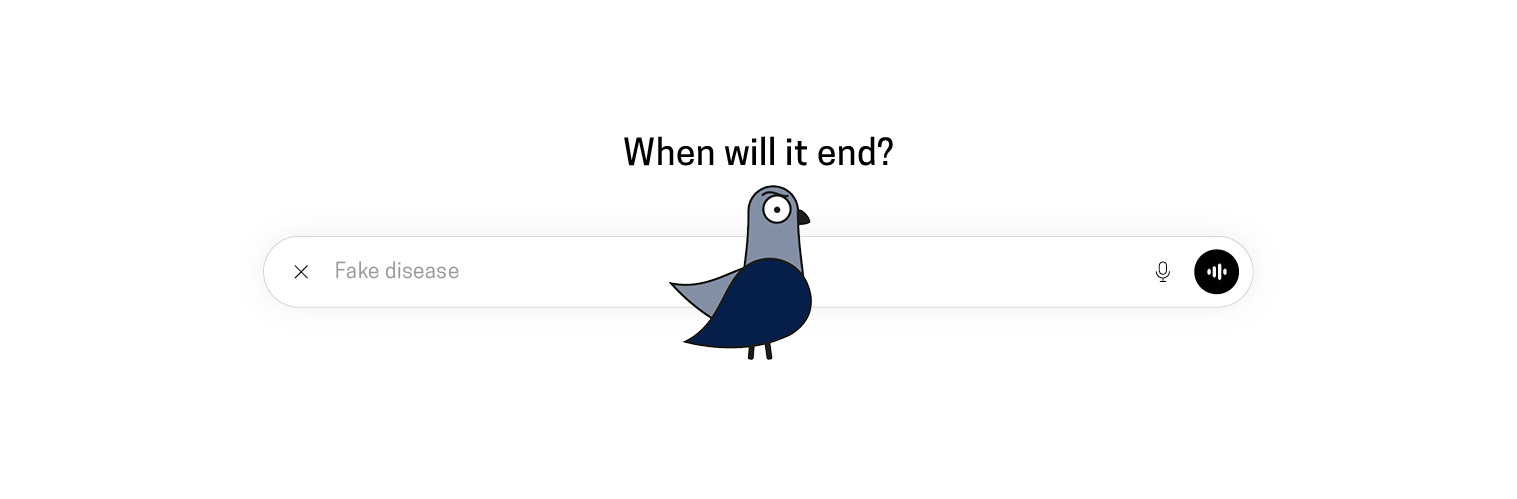
🤖 AI Confidently Told Patients They Had a Disease That Doesn’t Exist: This is wild. A researcher at Gothenburg University invented a skin condition called “bixonimania,” uploaded two spectacularly fake preprints - fictional author, fake uni and thanking Professor Sideshow Bob*, then watched as ChatGPT, Copilot, Gemini, and Perplexity all duly informed patients it was real. Aaaand it gets worse… the fake papers were then cited in actual peer-reviewed literature and only retracted after Nature (professionally) asked ‘wtf are you playing at?’ The cherry on top… the papers contained lines like “this entire paper is made up.” What a time to be alive.
💊 OpenAI Is Now, Functionally, a Pharma Company: Novo Nordisk announced a partnership with OpenAI to run AI across drug discovery, manufacturing, supply chain, and commercial ops, with full integration targeted by end of 2026. Follows Eli Lilly’s deal with Insilico Medicine in March, and Sanofi, Moderna, and Thermo Fisher all having signed similar agreements. OpenAI’s now in your pocket via ChatGPT, you give it your hospital data via ChatGPT Health and it’s designing the drugs that end up in you. Humanoid robots as GPs and it’s the full (?dystopian) health journey monopoly.
⌚ WHOOP Just Got Medicare to Pay for Your Fitness Tracker (Sort Of): Looks like patients with Medicare (US federal health insurance programme for people aged 65+) are about to get continuous health monitoring, personalised insights and real-time coaching via a WHOOP device, with cost-sharing covered. No need to change physician, no change to Medicare coverage. Just a wristband and a lot of data. Their CEO, Will Ahmed said on LinkedIn: “Our affiliated healthcare provider, Whoop Physician Services, PC, has been selected for the CMS Innovation Center’s ACCESS program, a first-of-its-kind initiative to bring technology-enabled, longitudinal care to Medicare beneficiaries to prevent chronic disease.” But more importantly, Reddit said:

If you need that explained, head to the footnotes**.
🩺 The AI Genie Is Out in Primary Care - & We Might Be Ok With It: The Lancet Primary Care is telling us that 28% of GPs in the UK are already using AI tools in clinical practice, and the NHS’s decentralised, independent-contractor model means adoption is racing ahead of any coherent governance framework. Their point isn’t that this is necessarily bad (and I’m inclined to agree), it’s that primary care is already the most AI-adopted part of the NHS, regardless of the centre’s readiness. A stopped clock is right twice a day etc…
🏗️ The FDP insider has left the building - and he's got things to say: Tom Bartlett spent three and a half years leading the 150-engineer team building the NHS Federated Data Platform. Now he's out, and he's written the defence of the FDP that no one inside NHS England was allowed to. His thesis, simplified: the political noise around Palantir has become so detached from the technical reality that it's actively harming the NHS. He has receipts - NISTA-green rating, 123 Trusts live, 110,000 extra operations, £200k per Trust per year - and he's not wrong that the loudest critics often haven't logged into the thing. But his "we all use Microsoft despite Bill Gates' Epstein associations" line is doing a lot of work***, and worth pulling apart.
✂️ CRISPR Just Got Small Enough to Actually Go Where It’s Needed: Researchers at UT Austin have engineered a miniaturised CRISPR variant - Al3Cas12f RKK (catchy), which fits inside adeno-associated virus vectors (the best delivery system for in-body gene therapy). The constraint’s always been that the most effective CRISPR proteins are too large to deliver precisely inside the body, which sadly limits clinical use to cells modified outside it. This doesn’t solve everything, but it’s a pretty meaningful step towards making gene therapy a realistic option for conditions like ALS, atherosclerosis, and certain cancers because gene editing efficiency has now jumped from under 10% to over 80%(!) across tested targets.
🌸 Menopause Startup Realised It Was Actually an AI Company (and Hit $1bn): Midi Health’s CEO Joanna Strober set out to fix menopause care and ended up building a custom AI chatbot because the general-purpose ones were, frankly, useless on women’s health. The gap in training data was that stark. Midi treats 25,000 patients a week with insurance coverage for over 45 million women and has just crossed the $1bn valuation mark - they’re now expanding into cardiology, obesity, and longevity. The AI piece analyses patient records before the clinician joins the call, automates triage, and mines what is apparently one of the largest women’s health datasets in existence. Bravo.
And finally…
🧠 A Neuroscientist Thinks He Can Reprogram Chronic Pain (£): Prof Mick Thacker’s argument, in a Telegraph feature this week***, is that we’ve been treating chronic pain almost entirely wrong. We currently treat pain as a signal from damaged tissue - fix the tissue, fix the pain. Prof Mick’s case is that chronic pain is better understood as a learned prediction the brain keeps generating long after the original injury has healed, and that the nervous system can, in principle, be retrained out of it through graded exposure, education, and movement-based therapy rather than drugs or surgery. If he’s right, it reframes a huge chunk of MSK, pain clinics, and opioid use…

A BRAND NEW newsletter - for clinicians, by clinicians 📚
Clinicians, are you looking for somewhere to shoot the shift? Yep, thought so, because working in clinical practice is a ‘unique’ experience and those that get it, get it. Introducing Shift Happens, the monthly newsletter for clinicians, by clinicians. Free, no fluff, plenty of memes and smattering of lessons that fellow clinicians have learned along the way. Read the first edition here. And subscribe there 👇

What to listen to 🔊
Worth a listen if you’re interested in any of AI, radiology, obstetrics, maternal/foetal medicine, neonates and even just the progression of medicine and tech. Robert Bunn, after multiple failed startups and personal tragedy, built Ultrasound AI which predicts delivery dates (including premature) from ultrasound alone. Skeptical? Listen for the PAIR study and their De Novo FDA clearance. We cover what the model found, how it works, and why Robert is committed to making it available to every woman on earth, regardless of ability to pay.
If the Bartlett blog above got you interested in the FDP debate, here's the ground-level view. Jordan Sollof spoke to Will Monaghan, Group CDIO at University Hospitals of Leicester - the first organisation to roll out the FDP at scale - about what it's actually delivered, how ambient AI from Accurx is changing the day job for clinicians, and why he thinks the platform isn't for everyone.
Events 📅

The Future of Prevention: Who Pays, Who Delivers, Who Benefits?
🗓️ 28th April
🇬🇧 Hale House, London
SomX and Neko Health are convening a closed-door, Chatham House Rule evening for senior leaders from the NHS, policy, government, investment, and the healthtech industry to grapple with the prevention agenda - who actually pays for it, who delivers it, and who benefits. Features a fireside between Neko’s Hjalmar Nilsonne and Dr Nikita Kanani MBE, hosted by yours truly (Dr James Somauroo). Not a product pitch, not a sales event - just the right people in the right room having the difficult conversation. Places are very limited (120 max) so make sure to apply ASAP.
DMEA
📅 21–23 April
📍 Berlin
Europe’s dedicated digital health IT congress - DMEA connects the full breadth of the digital health industry, from clinical informatics to health data infrastructure. If you’re looking to understand what’s happening on the continent, this is the room to be in.
BioSolutions UK
📅 21 April, 8:45am–7:30pm
📍 Glaziers Hall, London
Where engineering, biology, and commercial ambition converge. BioSolutions is the BIA’s flagship event for the UK’s biotech and life sciences sector - strong on investor access and the kind of frank conversations about what it actually takes to scale that you don’t always get at the glossier conferences.
🩺 RSM: Wearables & Bio-sensors - Transforming Health Monitoring:
📅 23 April 2026
🇬🇧 Royal Society of Medicine, London
The Royal Society of Medicine’s Digital Health Section turns its attention to the bit of healthtech we’re all wearing on our wrists (or fingers, or anywhere else a sensor will fit). A half-day session on how wearables and bio-sensors are actually changing clinical care - not the consumer-gadget hype, but the bit where the data hits the EHR.
📋 Hardian Health Tech Summit 2026:
📅 29 April 2026
🇬🇧 BMA House, London
The annual no-hype, high-substance day on getting regulatory-authorised healthtech to market, with speakers from MHRA, FDA, NICE and Notified Bodies. £50 including lunch and drinks. If you’re building anything that needs a CE mark or 510(k), this one pays for itself before the coffee break.
🌏 4th International Conference on Global Healthcare and Medicine:
📅 7–8 May 2026
🇲🇾 Kuala Lumpur
A two-day, 25-track gathering covering everything from oncology to e-health, aimed at clinicians, researchers and policymakers from across the region. If you want a passport stamp with your CPD points, here’s your excuse.
🔐 RSM: Cybersecurity and Clinical Risk Management in the Era of AI:
📅 13 May 2026
🇬🇧 Royal Society of Medicine, London
AI tools are being adopted across the NHS at a pace that makes the procurement teams sweat - and this RSM session looks at what that means for cyber risk and clinical safety. Early bird closes 30 March, so move quickly if you want it cheap.
🇦🇺 Digital Health Festival 2026:
📅 20–21 May 2026
🇦🇺 Melbourne
8,000+ attendees, 400+ speakers, 11 conference theatres and an After Dark Party - the southern hemisphere’s biggest digital health gathering, basically. If your roadmap includes APAC expansion, this is where you go to make it happen over a flat white.
Opportunities 🕵️♀️
🩺 Medical Operations - UK, Tandem Health: Tandem Health’s ambient scribe powers Accurx Scribe, which is being rolled out across 200,000-odd NHS clinicians. They want a recently-qualified clinician (FY1/FY2 types) to own deployments end-to-end across NHS secondary care - onboarding, training, prompt optimisation and feeding insights back to engineering. London-based, expect a lot of UK travel and the odd trip to Stockholm.
Medical Science Liaison, Cyted Health: Cyted’s EndoSign capsule sponge is the kind of thing that makes you wonder why we ever bothered with endoscopies in the first place. They need an MSL with 2–3+ years in clinical medicine or medical affairs, deep NHS GI/oncology relationships, and the gravitas to talk pathway redesign with consultants and commissioners. Remote with customer visits and trips to Cambridge.
💊 Clinical Service Manager (Specialist Teams), HeliosX: HeliosX hit £781m revenue last year. Anyway, this role line-manages three specialist teams - senior pharmacist prescribers, the side-effects nursing team, and the AVC doctors handling GLP-1 video consults - across the most clinically complex bits of the service. 3+ years managing clinical ops in digital health, hybrid in Central London.
See you next week, Pigeon fans ✌🏽
* IYKYK

** Brain worm guy = RFK Junior (NY Times) and see below for alleged obsequiousness. Don’t say we don’t give you references.
*** Classic ‘tu quoque’ - deflecting a criticism by pointing out the critic is guilty of something similar, rather than engaging with the criticism itself. The fact that we all grudgingly use Teams tells us nothing about whether Palantir should be running NHS data infrastructure; those are two separate questions, and conflating them lets the actual debate off the hook. There's also a deeper issue that I think Tom skates past: concentrated power means we have to use Microsoft. Choice isn't really on the table. My read is that the clinician backlash to the FDP is an attempt to demonstrate some ethical consistency in the one place they still have a voice, not evidence of hypocrisy. Tom's broader point about tech-vs-politics decoupling is genuinely worth all of us talking about though, and he's right that "what would you replace it with?" is the question that critics do keep ducking.
*** Small pigeon-preen: SomX placed this one, so, yes, SomX gets clients Telegraph coverage if you’re a PR client. Get in touch etc..
📣 Want something in front of our 7,500+ readers?
You can break your news as the main story, feature a podcast, job or event... and we even have a few sponsorship packages to choose from...
We review everything editorially - if it is not right for our audience, we’ll let you know. Everything has to be valuable to this glorious community.
See you next week, Pigeon fans ✌🏼

Healthtech Pigeon is produced by SomX - the media-led communications and creative agency for healthcare. We help healthtech, biotech, pharma and public sector organisations tell sharper stories through strategy, PR, content, design, events and media production. Built by clinicians, scientists and creatives who know the space. Work with us.
Your analysis of the infrastructure shifts here is spot on.
However, even as we look critically at these massive corporate rollouts, it’s important to remember that not all AI is bad. The technology itself isn't the enemy; rather, people and organizations need to do much deeper research into what specific AI tools to use, and when it is actually safe and appropriate to deploy them.
This need for verified, trusted data is the core mission behind BioSkepsis AI. We provide citation-based answers pulled directly from peer-reviewed, published papers on PubMed so researchers can bypass the general tech noise and see what the literature actually says.