


Hi friends,
What a week. France wants a slice of the British primary care pie, the NHS has left the building and maternity clinical standards are getting the makeover they desperately need.
Good news (literally). Pigeon Insider has launched.
Free Pigeon stays free. Insider is where I put the stuff I can’t publish to 8000 people - the off-the-record conversations, the bets I’d actually make, the things I hear outside recordings. If you’re building, investing, or operating in healthtech, this is the edge. This week was the second in a two parter on preventative health - who pays, who delivers, who benefits…
News Bites 🥪
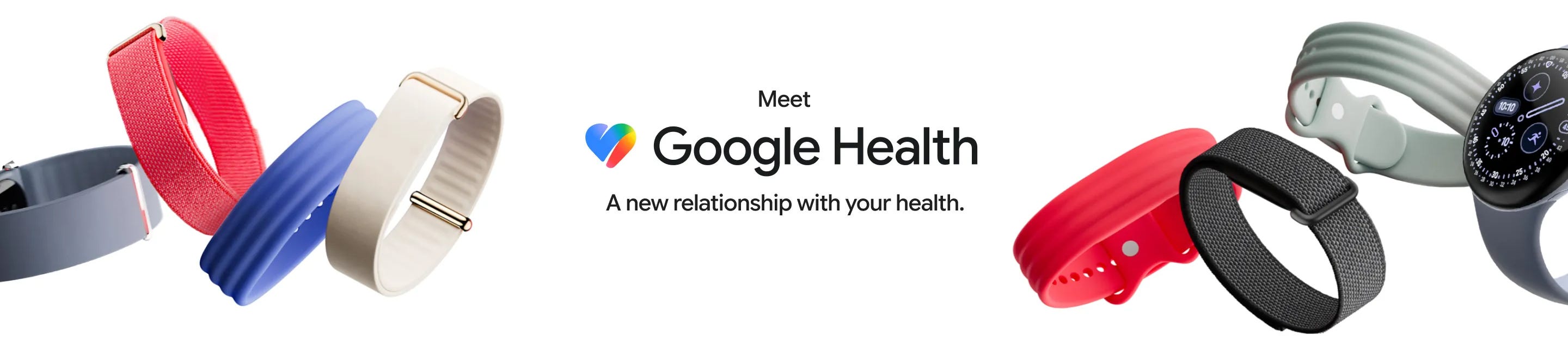
⌚ Fitbit is dead, long live Google Health: The race is hotting up and there are three things to clock here. Medical records are now flowing into the same apps as your step count. Google Health Coach is being bundled into AI Pro and Ultra, so anyone already paying for Gemini gets a 24/7 health advisor thrown in, which is a brutal pricing move against every standalone coaching app on the market. And the screen-less, subscription-less, $99 Fitbit Air is explicitly designed to feed the Coach the data it needs, so the hardware is now a sensor for the AI, not a product in itself. They’ve officially stopped pretending Fitbit is a wearable and started treating it as distribution. The pace of change in the consumer-wearable market is unreal.
🇫🇷 Doctolib bets £100m that it can crack NHS primary care: French AI and digital health giant, Doctolib, which plugs into 40,000 GPs across Europe, is pouring more than £100m into the UK, hiring 150 people, opening an R&D centre in London, and swallowing Medicus (clinical software system) in the process. The pitch is the usual AI-flavoured one of documentation support, workflow automation, admin assistance… i.e. claw back the hours GPs currently spend wrestling with screens. Whether EMIS and TPP feel the heat or just shrug and carry on is the more interesting question. A foreign challenger throwing nine figures at NHS primary care is a nice vote of confidence either way.
🔒 The NHS Just Pulled Down the Curtain on Its Own Code: This is an odd one. The NHS has ordered hundreds of their GitHub repos (public folders where developers store and share code) to flip from public to private because Anthropic's Mythos model can (allegedly) ingest codebases and find vulnerabilities that humans miss. Most of the repos in question are documentation, architecture diagrams, and the digital equivalent of clinic-rota spreadsheets (hardly the crown jewels), but the vibe has generally been that public services built with public money should ship code openly. Fair. Terence Eden, formerly of NHSX, gently pointed out that all this code was scraped for training years ago, so closing the gate now is a bit like locking the stable after the horse has joined an LLM 🐴.

📢 CALL FOR CONTRIBUTIONS - Shift Happens needs YOU 🫵🏼
Fancy being a newsletter star? Our friends at Shift Happens (the newsletter for clinicians, by clinicians) want your contributions for the next edition. Perhaps the unhinged thing a patient said to you with a straight face… the funny story only another clinician would get… the lesson you'd quietly pass to your F1 self. Think humour, learning and poignance - imagine if a Scrubs episode was a newsletter - that’s Shift Happens. Send your stories in here (and get a coffee for your troubles)👇
And why not subscribe for a little bit of joy in your week 👇
🤰 The NHS finally writes down what good maternity care looks like: A new national maternal care bundle is (finally) rolling out across every maternity service in England by March 2027. Five conditions account for 52% of maternal deaths - blood clots, cardiac disease, suicide, haemorrhage and pre-eclampsia. And this sets standards in those areas. Every pregnant woman gets an early VTE risk assessment (clots are now the leading cause of maternal mortality), routine perinatal mental health screening, and a tailored epilepsy plan if needed. Trust boards have to report progress and there’s escalation if they don't. The fact that it's taken until 2026 to standardise this (and that improvements in care may have made a difference to the outcome for 45% of women who died from 2021–2023) is incredibly disturbing.
🏥 Barts becomes the first NHS trust to let AI read patient complaints: Six months in and Barts has said that using Copilot to draft patient complaint responses has more than halved the time spent on letters, cut reopened cases "significantly" and got replies out faster. Is this AI taking over what should be a deeply human process? Actually, no, this has apparently meant more time actually talking to the families who complained. If you've ever read an NHS complaint response, you'll know they tend to read like they were written by a gaggle of lawyers afraid of their own shadow*, so a bit of AI-assisted drafting might, ironically, make them feel more human, but I encourage you to read this with the eye of faith as admin relief and appropriate AI experimentation. We don’t want unsafe/inappropriate use of AI, but we don’t want to demonise appropriate experimentation and learning either.
🤖 Doctronic raises $40m on a chatbot that renews your prescriptions: “The world’s most popular AI doctor” (their words, not mine) has closed a $40m Series B for their chatbot that talks to patients about symptoms before transferring them to a clinician via telehealth. They’ve already done a first-in-the-nation experiment renewing actual drug prescriptions through a chatbot. Sounds interesting. Now, there’s a version of this story where you cheer (access, scale, free at point of use), and a version where you raise an eyebrow about chatbots refilling controlled medication renewals at scale. If you’re in the latter camp, I bet you’ve never realised way too late that you only have one dose left of something you’ve been on for years and had to drive like you’re auditioning for GTA6 to get to someone that can sort it.
🤖 AI vs AI: the great American claims denial begins: Amperos Health has just bagged a $16M Series A to scale agentic AI that navigates payer portals, sits on hold with insurers, drafts the appeals, and resubmits the claims, which is the unloved admin grind that US revenue cycle teams (63% of which are reportedly understaffed) currently drown in. The company says it's already recovering $700m a year across 3,000 clinical locations but there’s $262 billion to solve, so investors are likely to be rubbing their hands in delight as they see that hockey stick graph taking shape. UK readers can enjoy a moment of smug NHS solidarity with this a largely US problem, but the underlying dynamic is, well… interesting. Insurers deploy algorithms to deny claims, providers deploy algorithms to overturn them, and somewhere in the middle clinicians are just trying to treat patients.
And finally…
🤖 The AI Doctor Will Actually See You Now. A Human Won’t: Brace yourselves. I stumbled across this story from May last year on Bloomberg (needs a free signup but highly recommend) and I’m sharing because I’ve ended up down a proper rabbit hole. A year ago, almost to the day, Shanghai-based Synyi AI announced it had opened what it claimed was the world's first clinic where an AI makes the diagnosis and writes the prescription, with a human doctor signing off afterwards without ever seeing the patient IRL(!?). There was a pilot apparently running in Saudi Arabia's Al-Ahsa region with Almoosa Health Group and a few dozen patients, and they reckoned the error rate during testing was under 0.3%(!?). When something seems too good to be true, it usually is…
I tried to triangulate / fact-check this and ended up with WAY more questions than answers. The Synyi website is currently "Under Construction" with a 2019 copyright in the footer. Their LinkedIn has 485 followers, no banner, no posts. Almoosa's own news page is empty. And there's been zero independent reporting in the year since this Bloomberg piece - every “world’s first” article you can find is just a rewrite of it. Very odd for a company claiming to be running a globally pioneering AI clinic.
So far, so suspect. Is it even a real story or real company!?
Well, yes. Synyi filed for a Hong Kong IPO on 30 September 2025 under the 18C specialist tech rules, with CSCI, CCB International and BOCOM International as joint sponsors, listing Tencent, IDG, Hongshan (the rebranded Sequoia China, who do list Synyi in their portfolio) and Granite Asia (the post-split Asia arm of GGV) as senior independent investors. So it’s a real company with audited financials and very strong backing, just without strong online presence.
But on the way to figuring that out, I did find Chinese-language coverage (translated via Chrome) of the same launch above, that put the error rate at "under 3%" NOT 0.3% - i.e. 10x what Bloomberg reported, which is a meaningfully less impressive number and a pretty significant mistake (if it is one) for a massive media platform to write of a company about to take on investors at IPO...
According to more translated Chinese coverage (also translated by Chrome) Synyi AI was allegedly down to about $6.7m of cash against $63m of current liabilities, which does make a hurried IPO make sense and PR, mistakenly talking about a lower error rate than what they had, rather fortunate for the company. Not so much for investors.
I only wanted to know more about the AI clinic! To be clear, all of this is alleged info from amateur Googling, translating and conclusion-forming.
What to listen to 🔊
Those who have subscribed and listened to the podcast for long enough will know I’m not a massive wearables guy. I thought I might be coming around, then I sat down with Tiril Elstad, founder and CEO of Endor Global to talk about why chronic stress may be our generation's biggest health risk - and why most wearables are making the problem worse. Cool, cool, cool.
What do investors look for? How do you sell into the NHS? Is now a bad time to raise? Answers are buried in 450+ episodes, nobody’s listening to 600 hours of audio to find them, so I (AI) made a thing. Type a question, get an answer in <10 seconds, with a link to exact episodes where the thing was talked about. Click any link and the episode opens to exactly when the guest said it in Spotify. It’s free. No signup or any of that nonsense. Just a search bar and results. Lmk what it gets right and wrong.
I mean the title says it all, probably one of my favourite topics to discuss and debate on. This episode of HSJ Health Check dives into the regulatory struggles in trying to keep up with this surge in demand for AI mental health support.
Events 📅

🎤 OPUS x SomX: HealthTech Unfiltered
📅 Tuesday 26th May, 6pm
🇬🇧 OPUS House, London (55 Southwark St, London SE1 1RU)
We (SomX) are teaming up with OPUS (the entrepreneur community) for an evening of two panels and zero corporate waffle. First the investors and operators on what's actually getting funded and how to escape NHS pilot purgatory, then the founders building with AI, navigating regulation, and making impact land as a commercial argument. Food, drinks, and the top floor afterwards. I’m hosting. Come and say hi.
📊 Digital Health Festival 2026:
📅 20–21 May 2026
🇦🇺 MCEC, Melbourne
APAC’s biggest digital health gathering - 5,000+ attendees, strong on government digital strategy and the My Health Record saga. Pigeon hears Australia is lovely in May.
🏗️ Pathfinder Digital Transformation Summit:
📅 2 June 2026
🇬🇧 88 Wood Street, London
Pathfinder’s CIC summit pulling together NHS digital leaders, vendors and policy folk on what “transformation” actually means once the consultants leave the building.
📈 From Records to Results: Unlocking Healthcare Through Data:
📅 5 June 2026
🇬🇧 RSM, London
The RSM’s data-focused day - how trusts are turning EHR exhaust into actionable analytics, with case studies from teams who’ve actually shipped something. Practical rather than theoretical, which is rarer than it should be.
🇳🇱 HLTH Europe 2026:
📅 15–18 June 2026
🇳🇱 RAI Amsterdam
The big one. Pigeon will be Pigeoning, potential SomX satellite event TBC. If you’re only doing one European healthtech conference this year, make it this one.
Visit the SomX events page or subscribe to SomX’s events roundup for everything else.
Jobs for humans 🕵️♀️
🩺 Medical Operations - UK, Tandem Health: A clinical role for an FY1/FY2-level doctor to own NHS secondary care deployments end-to-end - that's onboarding new trusts, training clinicians, optimising prompts based on what's working in the room, and feeding insights back to engineering so the product actually improves.
Medical Science Liaison, Cyted Health: This is a role where you’ll be building real relationships with NHS GI consultants, having high-level clinical conversations on pathway redesign, , and being the clinical face Cyted puts in front of NHS decision-makers. If you can confidently talk pathway change with consultants, this is the role for you.
🩺 Senior Medical Officer at HeliosX, Germany: HeliosX, the group behind Dermatica, MedExpress and ZipHealth, is launching in Germany, and needs a senior clinician to lead it. You'll build the local clinician network, own clinical governance, and shape how the service actually fits German healthcare. A rare chance to be the clinical founder-figure of a telehealth business in an entire market.
James’ editor notes:
* Did you know that there is no official collective noun for lawyers, but a lot of fun forums where potential ones are discussed? Popular suggestions include an ‘eloquence’ of lawyers, an ‘argument’ of lawyers and a ‘dispute’ of lawyers. These forums also contain suggestions like a ‘moan’ of clients and a ‘conspiracy’ of politicians. No comment from me on those, of course.
📣 Want something in front of our 7,500+ readers?
You can break your news as the main story, feature a podcast, job or event... and we even have a few sponsorship packages to choose from...
We review everything editorially - if it is not right for our audience, we’ll let you know. Everything has to be valuable to this glorious community.
See you next week, Pigeon fans ✌🏼

Healthtech Pigeon is produced by SomX - the media-led communications and creative agency for healthcare. We help healthtech, biotech, pharma and public sector organisations tell sharper stories through strategy, PR, content, design, events and media production. Built by clinicians, scientists and creatives who know the space. Work with us.