




Hello healthtechies. Very cool that we passed 8000 subscribers this week. People tend to call Pigeon “useful and a bit of comic relief,” which is exactly what we’re going for, so I’m glad it’s doing its job.
A big annual survey is coming to see what you’d like more or less of and any new ideas you have for how this can stay useful and entertaining. Stay tuned for that.
And if you missed HLTH Europe last week and still can’t deal with the FOMO, Harvinder (from Motics) and I had a chat about that and a few other bits from last week. Enjoy.
News Bites 🥪
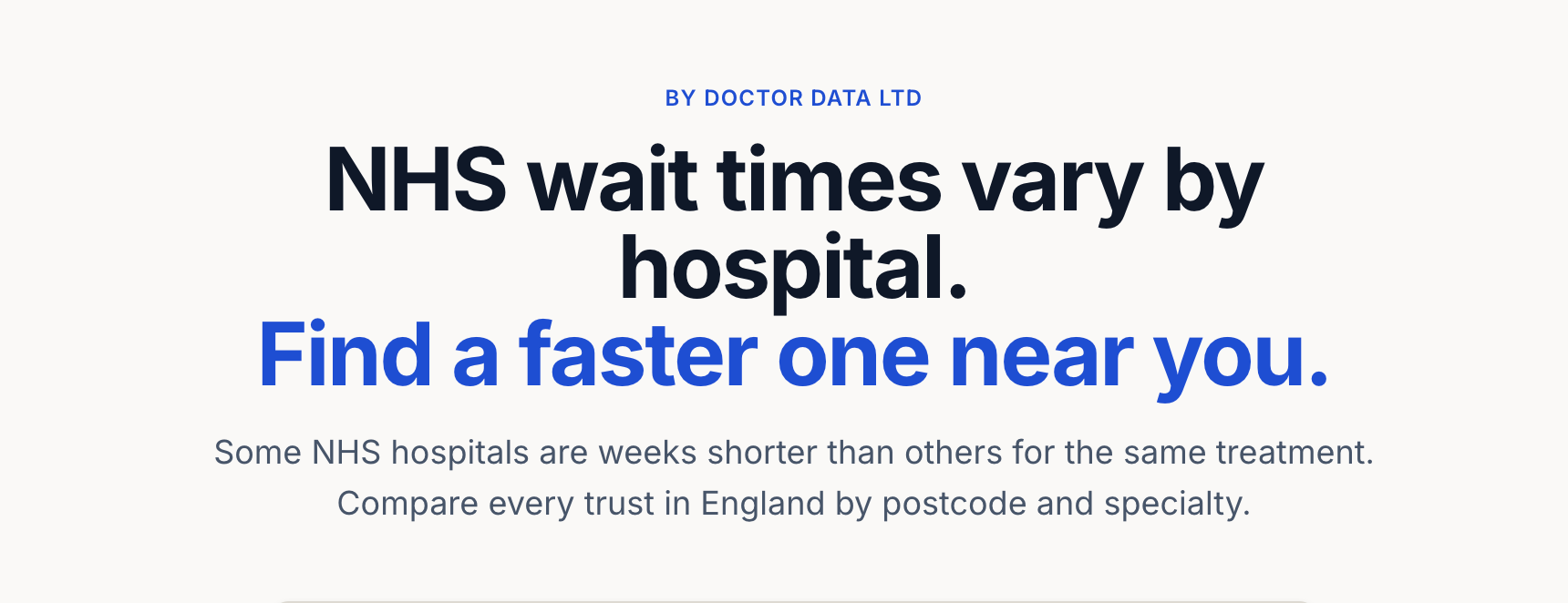
🩻 We now have a UK NHS waiting-times comparison - you can truly choose your hospital: Meet HospitalWaits.co.uk, built single-handedly by Dr Mustafa Ghafouri on top of NHS England’s own Referral-to-Treatment data. You type a specialty, and a postcode, and it ranks every hospital by waiting time, shows you the distance, tells you how many weeks you’d save by switching AND auto-drafts a Right-to-Choose letter to your GP so you can go wherever you like to get it done. For example, you’re looking at a 2 week wait on the Isle of Wight vs a 21 week wait in Coventry for parotid surgery. The data’s technically been “public” for years (hidden in a 49,000-row monthly spreadsheet), but easy for AI to solve and this is now an unbelievable innovation for patient choice. Great work all round.
🩸 A Healthtech Story With Zero AI In It, Somehow: Bleeding to death is not ideal, and for donkey’s years* the fix has been has been tourniquets, but people apply them wrong, can’t crank the windlass** hard enough and it doesn’t end well. The chief surgeon of the Armed Forces of Ukraine said it’s the number one cause of death in the field. Norwegian company, Aristeia, has spent a decade building a new, mechanical tourniquet with a transmission system that gets you to arterial occlusion in a couple of pulls, no brute strength required, no sensors, no companion app. Developed with the Norwegian Armed Forces and actually heading to end users in Ukraine. Healthtech doesn’t have to be complicated. Excellent work again.
🤝 Pastest buys Medics’ Money, and the “doctor life-admin” stack quietly consolidates: Every UK doctor has rage-revised with Pastest for 50-odd years and now they’re expanding their scope. They’ve acquired Medics’ Money, which, again, if you’re a UK medic, you’ll know is the only real place you can go for sensible, unbiased financial education. Dr Tommy Perkins and Dr Ed Cantelo are the founders, I was actually on their podcast a very long time ago and what a podcast it is by the way. Regularly appears in the top overall charts of the medicine category and highly recommend any episode except mine if you want financial education. Awesome to see a company like Medics Money getting acquired and seeing the good guys win.
💰 J&J and BGF pile into TRIMTECH, taking its Cambridge seed round to £35.6m Now heavily capitalised in a second way, TRIMTECH Therapeutics creates potent “degraders” that selectively target the removal of toxic proteins to treat intractable CNS and inflammatory disorders and they’ve done a particularly punchy $47m (£35.6m) seed round. Johnson & Johnson’s venture arm (JJDC) and BGF are the latest to join a cap table that already has Pfizer Ventures, Eli Lilly and Cambridge Innovation Capital nestled in it. Could be going places, this. By the way, a £35m “seed” is a pleasant reminder that biotech plays by entirely different rules to the rest of healthtech, so don’t go getting any ideas (or ambition) around raising that amount if you’re not completely altering human physiology.
🩸 The World's First Smart Menstrual Cup Clears the Regulators: The Emm Cup has just picked up UKCA marking and MHRA registration, so it’s now officially the first regulatory-cleared smart menstrual cup. It’s medical-grade silicone that passively measures flow volume and cycle patterns, syncing to an encrypted app when it's docked in its case. That means instead of inferring the cycle from proxies like temperature and heart rate, measuring flow gives a new, important and very informative phenotypic baseline. As that dataset grows, conditions like endometriosis and menorrhagia become more understood and the data gap keeps reducing.
♀️ The EU has finally put “women’s health blind spot” in writing: Talking of the data gap, The European Parliament’s Committee on Women’s Rights and Gender Equality wants to see a full report on the exact systemic inequality in women’s health research, diagnosis and treatment that we’re talking about. And that’s because of the familiarly grim numbers that won’t surprise you… 72% of drug trials don’t break their data down by sex… 5% of global R&D funding goes to women’s health. None of this is new information, and a committee nodding a report through is several galaxies away from anyone funding it, BUT the full Parliament votes in September, at which point we'll see whether things actually happen (specific research funding and/or mandating sex-disaggregated data could become policy)… or just another report.
🤖 Meanwhile, the UK throws £8m at specific AIs to shrink waiting lists: Not as a direct consequence of Mustafa highlighting it above, but not, not relevant, the NIHR’s i4i programme has made it rain to the tune of £8,136,409 across six AI projects trying to cut NHS waiting times and broadly improve care. Headline-grabbers are the imaging tools, (gotta love the name) SAMURAI-CT for head CTs, SMART-XR reporting CXRs autonomously, an AI-ECG heart failure screen and even a digital therapy for kids with tic disorders. These are funded evaluations, so discharge times and workflow are actually measured, rather than just model accuracy on a tidy test set, so encouraging for sticky adoption.
🧠 And finally...
Imagine never needing to go to sleep… maximising shareholder value 24 hours a day…. well… that dream could soon be a reality.
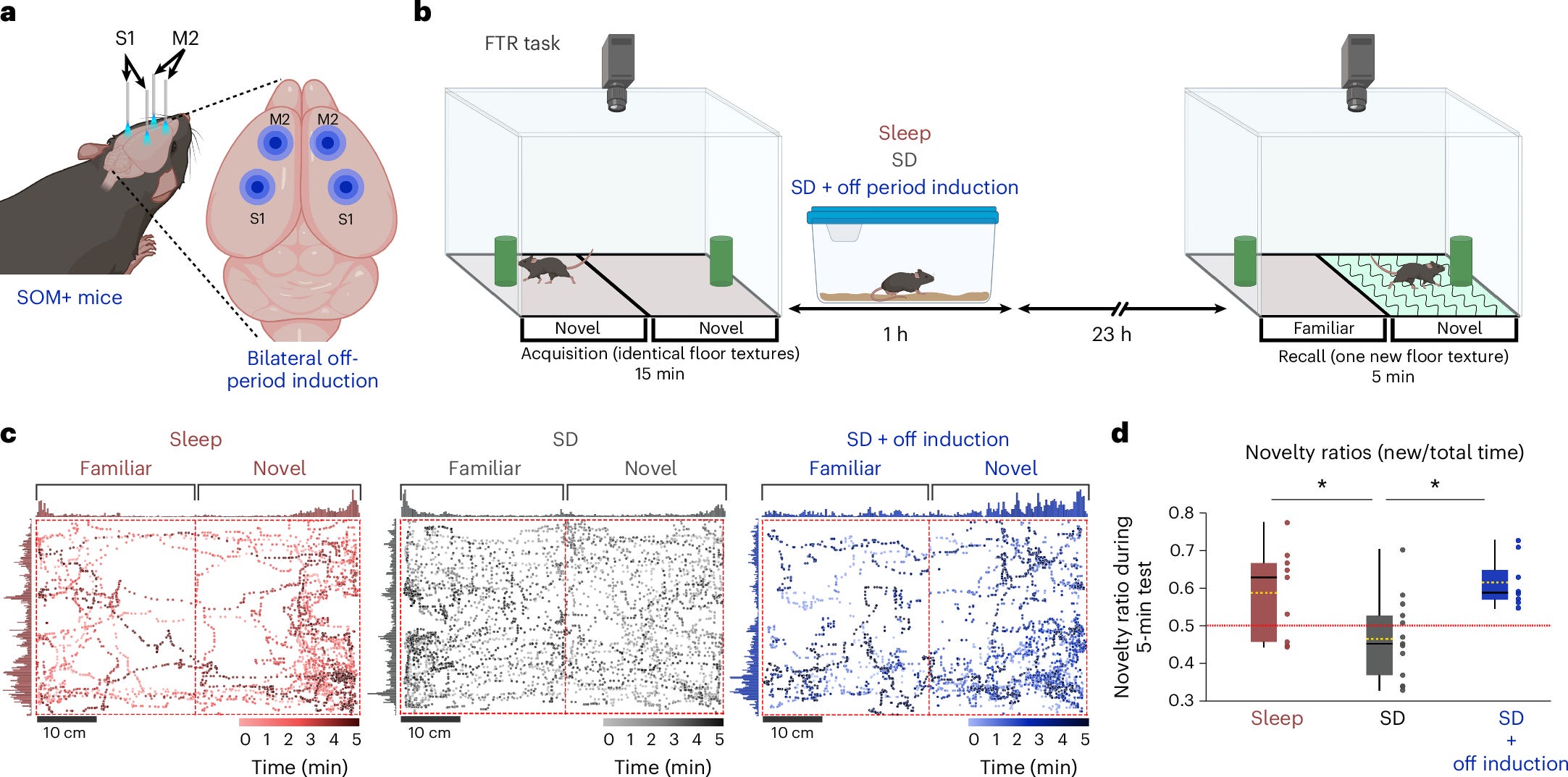
Scientists have worked out how to get the benefits of sleep without sleeping, and the internet has lost its mind. The actual study, in Nature Neuroscience, comes from Tononi and Cirelli’s lab, the same people behind the synaptic-homeostasis hypothesis (TLDR on that hypothesis is “sleep is the price the brain pays for plasticity”). Using optogenetics (using light on neurons), they induced sleep-like on/off cortical rhythms in sleep-deprived mice and managed to lower local “sleep pressure,”*** reduce markers of synaptic strength, and rescue memory performance back to well-rested levels. I cannot wait to see what Bryan Johnson does with this information. Someone please tag him.
Pigeon insider is the upgraded newsletter for those of you that want deep research, analysis and to steal the ideas to sound incredibly smart in front of everyone else.
This week’s is epic, if I do say so.
Has venture capital worked in healthtech? Yes and No.
I deep dive what’s worked, what hasn’t, the past, present and future of venture capital in our space, as well as the myriad of other mechanisms to fund a business. There are bootstrapped healthtech companies with their tech across 90 NHS sites and there are companies worth $4.2B through venture rounds now worth nothing. There’s no right and wrong, but there is a right and wrong for your business, and this moment in time.
Read all about it.
What to listen to 🔊
This week is the first of a few journalist interviews I’m sprinkling amongst the usual guests. Cate Lawrence, who brings a decade of cross-sector reporting (wearables, women's health data, Ukrainian healthtech, the push for European digital sovereignty) talks about how stories actually get chosen, what makes a startup worth covering, and why the gap between innovation and clinical impact stays so stubbornly wide.
Peter Birch and a panel of Australian digital health leaders (Monash Health, eHealth NSW, St Vincent's) get refreshingly honest about what it actually takes to make healthcare tech work in a real clinical setting… co-designing with clinicians, wrangling legacy systems, and building a business case that finance will actually sign off etc..
Shaun Hockey, spent 22 years building Medacy while the NHS reorganised itself around him roughly once a fortnight. Good, honest stuff on entrepreneurship, PCNs, and unglamorous bits of healthcare leadership in this one. And Tara’s predictably excellent.
On Jing’s latest episode, Dr Meenakshi Jhala explains how she went from fifth-year medical student with zero finance background to co-founding DX Capital, a clinician-led angel syndicate funding the things clinicians actually know healthcare needs. Useful listen if you're a doctor eyeing the investor side of the table and wondering where to start.
Events 📅
Health Creators Connect (a SomX event, in partnership with Micropharm)
📅 13 July, 7 to 9pm
📍Atom Coffee, London W3
We (SomX), alongside MicroPharm, are bringing together the people who quietly run the UK's healthcare content machine for an intimate, invitation-only evening. It’s off the record, it’s honest, it’s real and it’s a heck of a lot of valuable info if you’re a creator. Jessica from SomX is giving candid talk on the actual business of it - negotiating, working with brands, cash versus equity, hiring, getting paid properly, then a live AMA. If you make, shape or fund health content in the UK, get your application in. All will be revealed on why SomX can confidently talk on this, too… 🤫
GITEX AI Europe
📅 30 June to 1 July
📍 🇩🇪
Berlin Europe’s big AI showcase, healthtech included. Go if you want to see where the wider AI hype is heading and pick the genuinely-clinical needles out of the very large haystack.
HealthTech Integrates 2026
📅 1 July
📍 🇬🇧 ARC, West London
An in-person day on healthcare-tech innovation and, more usefully, the kind of networking where actual deals get done rather than just LinkedIn connection requests. Worth it if you’re trying to get something adopted rather than just admired.
King’s Fund Digital Health and AI Conference 2026
📅 Tuesday 30 June
🇬🇧 The King’s Fund, Cavendish Square, London
A full day cutting through the AI noise: what is real, what is next, and what is at stake. Expect the NHS App as digital front door, ambient AI, and a mini hackathon, with the MHRA chief exec and NHS England’s AI policy lead on the bill.
HealthTech Integrates 2026
📅 1 July
🇬🇧 ARC, West London
An in-person day on healthcare technology innovation, integration and the networking that actually moves things forward.
Women in Biotech, Canary Wharf
📅 8 July, 16:00–20:00
🇬🇧 25 Churchill Place, Canary Wharf, London
An evening on how biotech leaders build and navigate relationships with investors, hosted by the BioIndustry Association. Insight, connection and conversation, with a glass of something in hand.
AireFest 2026
📅 9 July
🇬🇧 Leeds Aire
Logic’s healthtech festival heads to Leeds, a welcome reminder that the sector exists north of the M25. Worth the train.
Safe Enough? Building Trust in AI for Mental Health (MHIN)
📅 10 July, 9:30am to 1:30pm
📍 🇬🇧 Hale House, London
The Mental Health Innovation Network’s morning of honest debate on one of the trickier corners of the AI conversation: how much trust mental health tools have actually earned. Given half this week’s bites are effectively a seminar on AI safety and the limits of the evidence, it’s well timed. And Hale House events are always worth a look.
Digital Health Summer Schools
📅 16 to 17 July
📍 🇬🇧 UK
Two days with NHS CIOs, CCIOs and CNIOs, with three national digital leaders already confirmed. Less polished-keynote, more how-do-we-actually-do-this, which is the useful kind.
Women’s Health Week Europe
📅 7 to 8 October
📍 🇬🇧 Emirates Stadium, London
A way off, but flagged now because pre-agenda pricing (savings of up to £600) ends midnight Friday 26 June. If it’s on your list, today’s the day to book.
Visit the SomX events page or subscribe to SomX’s events roundup for everything else.
Jobs & opportunities 🕵️♀️

🩺 Clinical Product Director, Alertive (UK, hybrid) Alertive makes the clinical communication infrastructure that lets you coordinate in real time instead of fighting disconnected systems, and it's now live across 50-plus hospitals. This is the rare clinical role with genuine product ownership - you'd own the roadmap, sit between product, commercial and clinical safety, and be the voice in the room with medical directors and CNIOs. Emergency medicine background and a couple of years in a healthtech startup would be ideal, it's remote, Series A equity, and they'll happily keep you in one PA per week to stay sharp.
🛠️ Implementation Manager, Patchwork Health (UK) As you well know, Patchwork builds the staff-bank and temporary-staffing rails that keep NHS rotas from collapsing. This is the role for someone who finds genuine satisfaction in making a thing actually land in a trust, not just demo well in a sales deck.
🚀 PharmStars Fall 2026 cohort (Boston-based, applies globally) Not a job, an opportunity: PharmStars is the pharma-focused accelerator for digital health startups, and this cohort’s theme is “Digital Innovations in Immunology.” Graduates get a $100k SAFE plus structured routes into pharma partnerships, which is the bit most digital health founders find hardest to engineer on their own. If you’ve got a market-ready tool in immunological prevention, diagnosis, treatment or patient care, worth a look.
James’ editor notes:
* Donkey's years started as a pun on donkey's ears. Donkeys have famously long ears, so "as long as a donkey's ears" became a way of saying "ages.” Then "ears" became "years" which kinda made sense because donkeys actually do live a long time… 40-50 years!
** Not the Bradford and Hull City striker, that’s Dean Windass. Windlass means a winch. The thing you pull to make it tighter. I’m sure you got that from context.
*** Apologies for triggering anyone with young children. If you know the term ‘sleep pressure’ then I know you also know about ‘sleep consultants’ and have had a load of unsolicited advice thrown at you before recruiting one. Yes Karen, I have tried waking them up from their daytime nap and having a nighttime routine. Shut the f…
📣 Want something in front of our 8,000+ readers?
You can break your news as the main story, feature a podcast, job or event... and we even have a few sponsorship packages to choose from...
We review everything editorially - if it is not right for our audience, we’ll let you know. Everything has to be valuable to this glorious community.
See you next week, Pigeon fans ✌🏼

Healthtech Pigeon is produced by SomX - the media-led communications and creative agency for healthcare. We help healthtech, biotech, pharma and public sector organisations tell sharper stories through strategy, PR, content, design, events and media production. Built by clinicians, scientists and creatives who know the space. Work with us.