



Hey everyone, coming to you slightly late as I’ve just flown in, so hope you spot the deliberate mistakes and typos.
Anyway, this week, the MHRA’s dealt the sector a nice new AI framework, which people seem to like. We’re critiquing AI in places, we’re celebrating it, researching it, deploying it in other places…
You’re living through the AI revolution in healthtech and if you’re reading this you have a front row seat.
What a time to be alive.
James
News Bites 🥪
🇬🇧 National Commission into the Regulation of AI in Healthcare: Loads of people talking about this online and here’s what you need to know… The big shift is the one-off regulatory approval moving to whole-lifecycle. That means a device gets released to the market under supervision, then earns full authorisation by behaving in the real world. Hugh Harvey, who sat on the technology working group, calls it a learner plate system, which is bang on. Many will say it’s overdue and I’ve spoken to people on the podcast who have said similar. A single-timepoint assessment tells you basically nothing about a model that drifts as soon as meets a population it wasn’t trained on. And there are finally some teeth… fines for non-compliant manufacturers, plus a recommendation to build a public naughty list and make adverse event data searchable.
🎙️ AI scribes fail to capture patients’ experiences: Edinburgh University’s team went through 27 papers and found that they transcribe speech beautifully but not facial expression, hesitation… no “patient-says-fine-but-clearly-isn’t.” When you think about it, it’s obvious, they privilege clinical data over the story, which means it’s up to the clinician to still add those parts. Also, patients clam up on the sensitive stuff once they know they’re being recorded, and clinicians are starting to not recognise their own notes. Meanwhile, Digital Health and Care Wales opened a £10m AVT framework on 2 September, and HSSIB’s investigation into AVT harm in hospitals doesn’t report until summer 2027. Procurement is moving faster than the evidence and faster than the safety machinery.
💷 First procurement competitions launch for £100m sovereign AI scheme: Aiming to support British AI companies to “start here, scale here and win globally”. DHSC owns challenge 4, which is AI for a more productive NHS. It covers workflow automation, care coordination and decision support. Contracts run £250k to £10m, most expected at £1m to £3m. Interestingly, it’s open to UK-registered startups and SMEs with no minimum turnover and no trading history, provided at least half the contract value goes on R&D services. This is the sovereign bit… the state’s decided to support British AI startups that have never sold anything before
defaulting to a US incumbent. Batch one closes 1 October with an outcome by 31 October, which gives DHSC four weeks to assess a pile of AI proposals. If you’re submitting, get a move on.
🧠 Sam Altman's mind-reading startup has gone shopping for ultrasound chips: Ok deep breath to get through AI dystopia weekly. I’ll explain what’s going on. Brain-computer interfaces read activity out of your brain and turn it into something a computer can use. The one everyone knows is Neuralink, which is hair-thin electrodes in the cortex, you get a superb signal, but neurosurgeon required. Merge Labs, Sam Altman's $252m neurotech outfit, is betting on reading the brain from outside using ultrasound instead, which is why it’s just licensed Butterfly Network's Poseidon chips, the same ultrasound-on-a-semiconductor kit behind their phone-sized ultrasound probe. Functional ultrasound doesn't see neurons fire, it sees how blood flow shifts towards whichever bit of brain is working, so you trade a lot of resolution for not having a hole drilled in your head, which, let’s be honest, is preferable. The catch is that your skull scatters ultrasound pretty badly, so a way to go yet, but it’s all pretty interesting.
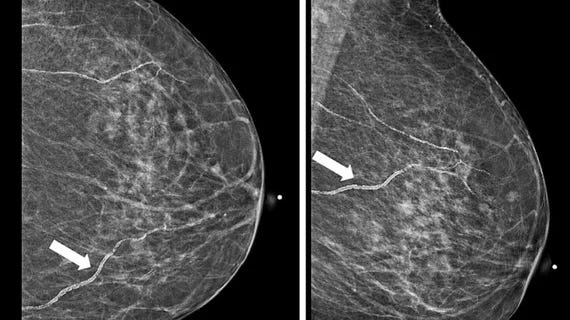
🫀 Come for the mammogram, stay for the cardiovascular assessment: Given the scale of cardiovascular disease in women, we're still rubbish at picking it up early. Researchers at Sheba Medical Center trained a deep learning model on 97,364 mammograms from nearly 30,000 women and got it spotting hypertension, ischaemic heart disease and stroke risk from images taken for an entirely different purpose. AUCs of 0.79, 0.78 and 0.86 respectively, which is decent (but not diagnostic and the team did say so themselves). The appeal for this is pretty obvious, though. Mammography screening already pulls millions of women through the door at an age when cardiovascular risk might be starting to compound. It’s a free signal from an image we’re taking anyway and if we get the right system in place here, it could be a very positive.
🩺 Ipremom raises €15m seed for a blood test that flags pregnancy complications in the first trimester: Valencia’s iPremom has taken €15m in seed from Amadeus Capital Partners, Asabys and APEX to read cell-free RNA in maternal blood to flag markers of decidualisation resistance at 9 to 14 weeks, which is months ahead of symptoms. It’s built off the PREMOM study’s 26,000 samples across 10,000 pregnancies, i.e. a serious dataset for a seed round. Clinical validation’s still to come.
And finally…
🚽 Buried underpants and a new definition of kissing win 2026 Ig Nobel prizes: The 2026 Ig Nobels landed in Zurich last week, and the one to care about is physics, which went to two urinal geometries, Cornucopia and Nautilus, that cut splashback to 1.4 per cent of a conventional commercial urinal by holding the stream impingement angle at or below a critical 30 degrees. Real fluid dynamics, peer reviewed in PNAS Nexus, and it comes with a number: America’s roughly 56 million non-residential urinals splash more than 350,000 litres of urine onto floors every single day. Underneath the giggling there’s a serious infection control point about hospital floors that nobody funds, and a considerably less serious one about the state of the average gents.*** Innovation comes in many forms, people.

This fortnight’s Pigeon Insider edition asks “Will the NHS Waste the AI Moment?”
It comes out of the last SomX event with Rt Hon Sir Jeremy Hunt MP. Everyone in the room agreed AI is the moment, but we didn’t agree on who pays, who carries the risk, or what happens when the pilot funding runs out. Hunt was very candid about what he'd do differently…
Will the NHS waste the AI moment?

In 2012, a few months into the Health Secretary job and with no background in health whatsoever, Jeremy Hunt started doing half-day shifts at Watford General, washing beds between patients in A&E.
What to listen to 🔊
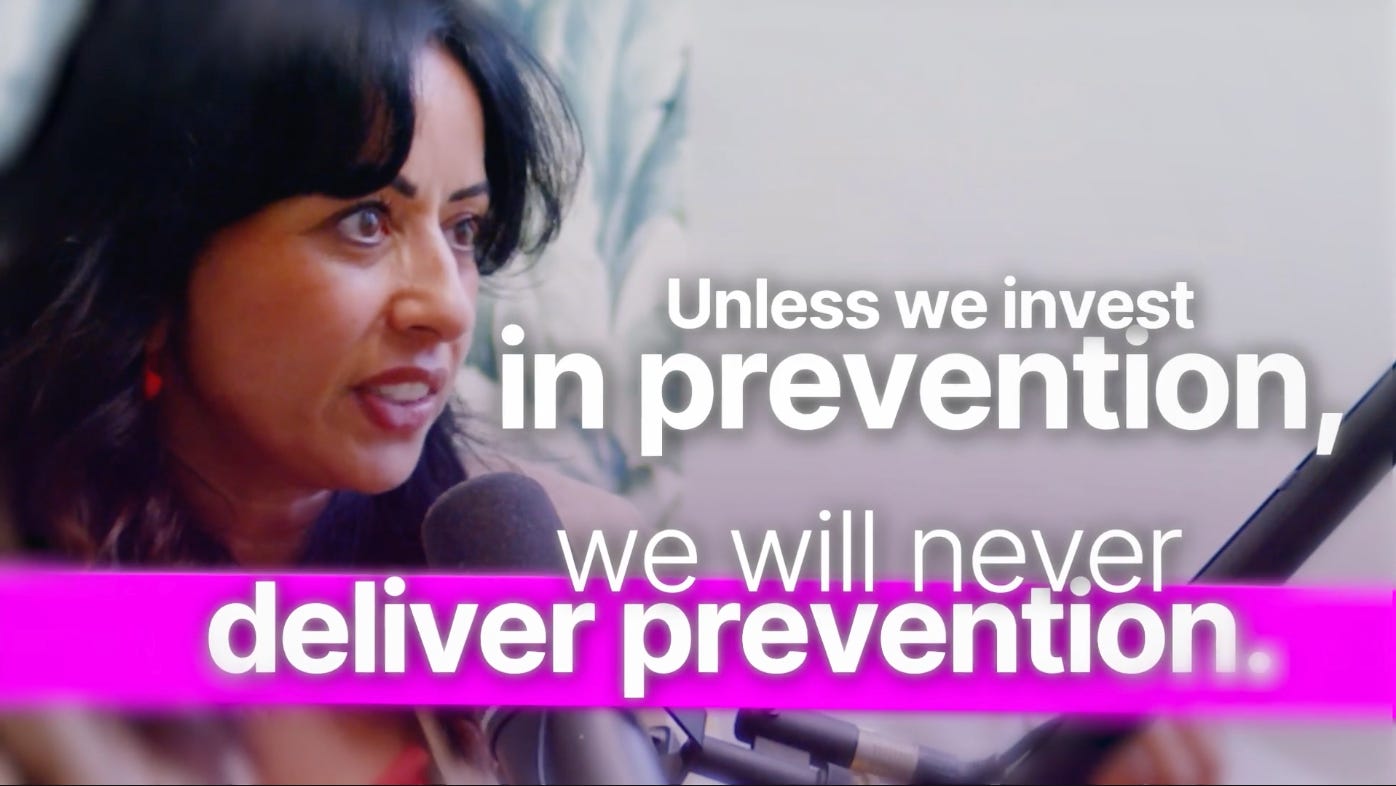
Dr Nikita Kanani, Global Medical Director at Neko Health and still a practising GP, joins me to talk about what three years of Neko’s outcome data actually shows, and whether prevention at scale survives contact with the NHS. Recorded in person, which is always makes for a better one! Video on Spotify and Youtube.
Laura Earnshaw, founder of myHappyMind and ex Global Head of Talent at AstraZeneca, on teaching resilience to children as young as three. Possibly the most on-brand career pivot in healthtech.
Tara Humphrey and Dan Burton get into sleep, movement, consistency and the lifespan versus healthspan argument as applied to the people running the NHS. Healthcare professionals telling other healthcare professionals to move more: the "do as I say, not as my rota allows" of wellness advice.
Lucy Procter, elite HYROX athlete, spent years being told her PMDD symptoms were laziness. She talks late ADHD and autism diagnosis, masking, and how PMDD affected training and recovery at competition level.
Events 📅
Longevity Investors Conference 2026
🗓️ 14-17 September
📍 🇨🇭 Gstaad.
Family offices, funds and private investors in a ski resort, talking rejuvenation science with the people doing it. Heavy on capital, occasionally light on endpoints, but the money moving into longevity is real and worth watching.
Mental Health Innovation Showcase, Hale House
📅 15 September
📍 🇬🇧 Hale House, London.
MHIN’s showcase returns to the Harley Street Health District for a full day (noon to 9pm, so pace yourself) of mental health innovation. Given how much of this space still runs on vibes rather than evidence, worth your time.
Life Sciences Week 2026
🗓️ 21-25 September
📍 🇬🇧 Birmingham.
Britain’s national life sciences week, pulling biotech, medtech, pharma, academia and investors into one place. A proper cross-sector convening rather than the usual echo chamber.
LSI Europe ‘26 Emerging Medtech Summit
🗓️ 28 September-1 October
📍 🇪🇸 Barcelona.
Europe’s leading emerging-medtech investor summit, matching founders with VCs, PE and strategics. Sunny, well-connected, and squarely aimed at getting deals done.
HETT Show 2026
🗓️ 29-30 September
📍 🇬🇧 ExCeL, London.
Three thousand-odd NHS digital and clinical leaders, 150 suppliers and five CPD streams under one roof at ExCeL. If you want to know what trusts are actually buying rather than what vendors wish they were buying, this is the one.
Harley Street Health District Conference 2026
📅 20 October
📍 🇬🇧 1 Wimpole Street, London.
A full-day conference from the district becoming one of London’s biggest healthtech hubs.
Visit the SomX events page or subscribe to SomX’s events roundup for everything else.
Opportunities 💰
🎨 Product Designer (Staff/Principal) - Anima, London, hybrid: Anima are automating referrals, prescriptions and care coordination to leave GPs free for the human bits. The NHS-side answer to the AI-fights-admin trend above.
🩻 Clinical Operations Specialist - Scan.com, US, hybrid: Scan.com runs America’s national imaging network, managing the whole pathway end to end rather than bolting bits together. This role is the human quality check, so matching reports to appointments, chasing radiology groups on priorities, keeping records straight.
🔧 Senior Medical Device Quality & Regulatory Engineer - Flow Neuroscience, Malmö/London, hybrid: The FDA-approved at-home depression headset needs more brainpower. Literally, it’s a brain stimulation device. Join as they scale from 55,000 EU/UK patients into the US.
📣 Want something in front of our 8,000+ readers?
You can break your news as the main story, feature a podcast, job or event... and we even have a few sponsorship packages to choose from...
We review everything editorially - if it is not right for our audience, we’ll let you know - everything has to be valuable to this glorious community.
See you next week, Pigeon fans ✌🏼

Healthtech Pigeon is produced by SomX - the media-led communications and creative agency for healthcare. We help healthtech, biotech, pharma and public sector organisations tell sharper stories through strategy, PR, content, design, events and media production. Built by clinicians, scientists and creatives who know the space. Work with us.