




Sup healthtechies.
All I really need to say this week is that literal humanoid robots are operating on pigs now. They’re stealing the show… and probably your next surgical job.
There are some other stories in this week, but let’s be honest, that’s the one you’re interested in on a Sunday night!
Enjoy.
News Bites 🥪
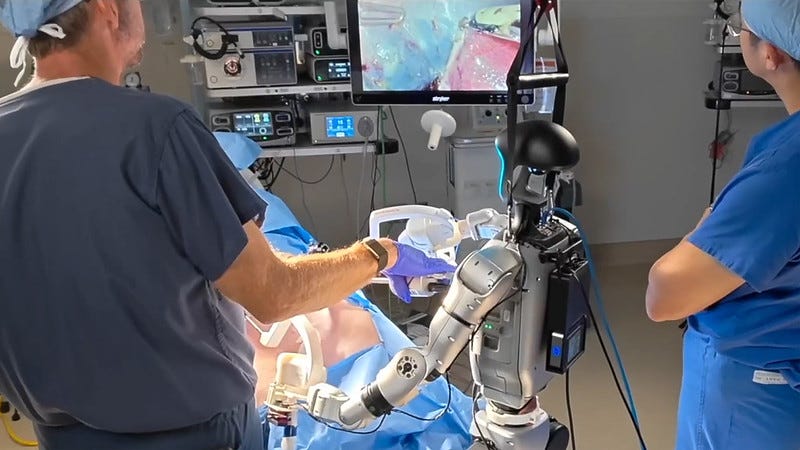
🤖 Two humanoid robots just took out a pig's gallbladder: I mean… two literal robots with arms and legs just did a laparoscopic cholecystectomy. They walked in and used standard laparoscopic instruments in a standard theatre. Questions include “why?” and “who consented the pig?” In answer to the first question, the alternative robot option is a da Vinci machine, which needs its own instruments, its own docking ritual and its own postcode given the size of it, whereas these little humanoid characters just walk in and get on with it. Yes, precision, latency, safety and all that stuff are all still miles off clinical grade (again, who tf consented the pig?), and the authors do admit that, which is refreshing (again, if you’re not a pig). TLDR… it’s a feasibility study, not a product, but it's a step towards an argument for actual robots doing actual surgery. Is this feet-up-utopia or existential-dystopia? No idea. Absolute knife edge. How fun.
🔬 OpenAI’s giving away frontier models to 100,000 scientists: It feels like unlocking the secrets of human biology is the really big prize for these whopper AI companies. ChatGPT for Academic Researchers starts with 10,000 researchers this summer and scales to 100,000 by 2027. It’s part of a $250m commitment to “external scientific research and discovery.” Participants get GPT-5.6 across ChatGPT, Work and Codex, plus 75-odd life science skills covering genomics, single-cell analysis, protein modelling and drug discovery, and connectors into public genomic and clinical databases. At Boston Children’s, their “co-pilot geneticist” has apparently cracked more than 40 previously unresolved rare disease diagnoses so far. Impressive.
💍 Samsung announces FDA-cleared smart ring for sleep apnoea: This could be really impactful given the incidence and downstream effects of sleep apnoea… The Galaxy Ring is getting FDA-cleared to flag risk of the condition. Wear it for two nights in a 10-day window, an algorithm counts your breathing disruptions per hour and sorts you into one of three buckets. It's risk detection for moderate to severe OSA in undiagnosed adults, so not a ‘diagnosis,’ before anyone shouts ‘gotcha'.’ The consumer wearables lot are now quietly running a very large, very unfunded case-finding programme for a condition that sleep services are already struggling to keep up with. Not the first time I’ve concluded that a sleep clinic is a good investment rn.
🏖️ The MHRA has opened a sandbox and yes, it's actually open: Ten AI medical device manufacturers will get to deploy in live NHS settings across London under direct MHRA oversight, alongside NHS England (London) and the Health Innovation Networks. No application fee, EOIs open until all ten slots are filled, and the priority areas are heart health, neighbourhood care, and anything that stops the NHS App disappointing us. Obviously, 10 devices is a small number for a city of 9,000,000+, but this is about generating real-world evidence of ongoing safety and effectiveness, to inform regulatory decisions. If you build AI-enabled devices and you're not sending an application in, have a word with yourself.
🇺🇳 The UN has read the AI hype and remains unmoved: I found this pretty interesting - the Independent International Scientific Panel on AI has published a preliminary report, essentially saying ‘the model is the easy bit.’ AlphaFold, AI-assisted breast screening, diabetic retinopathy screening reaching 600,000 people in India, all great, but all dependent on referral pathways, trained staff and local language support sitting underneath them. AND. Strip out the care network and you've basically built a confident machine for telling people bad news with nowhere to send them. Also, a sensible line drawn between task-specific clinical AI and general-purpose models, which belong nowhere near a diagnosis (I know we talk about that a lot here). They call out sycophantic models being linked to serious mental health harm and consumer chatbots are drifting into clinical use. Procurement is the intervention but good luck making that ‘innovation’ sound cool.
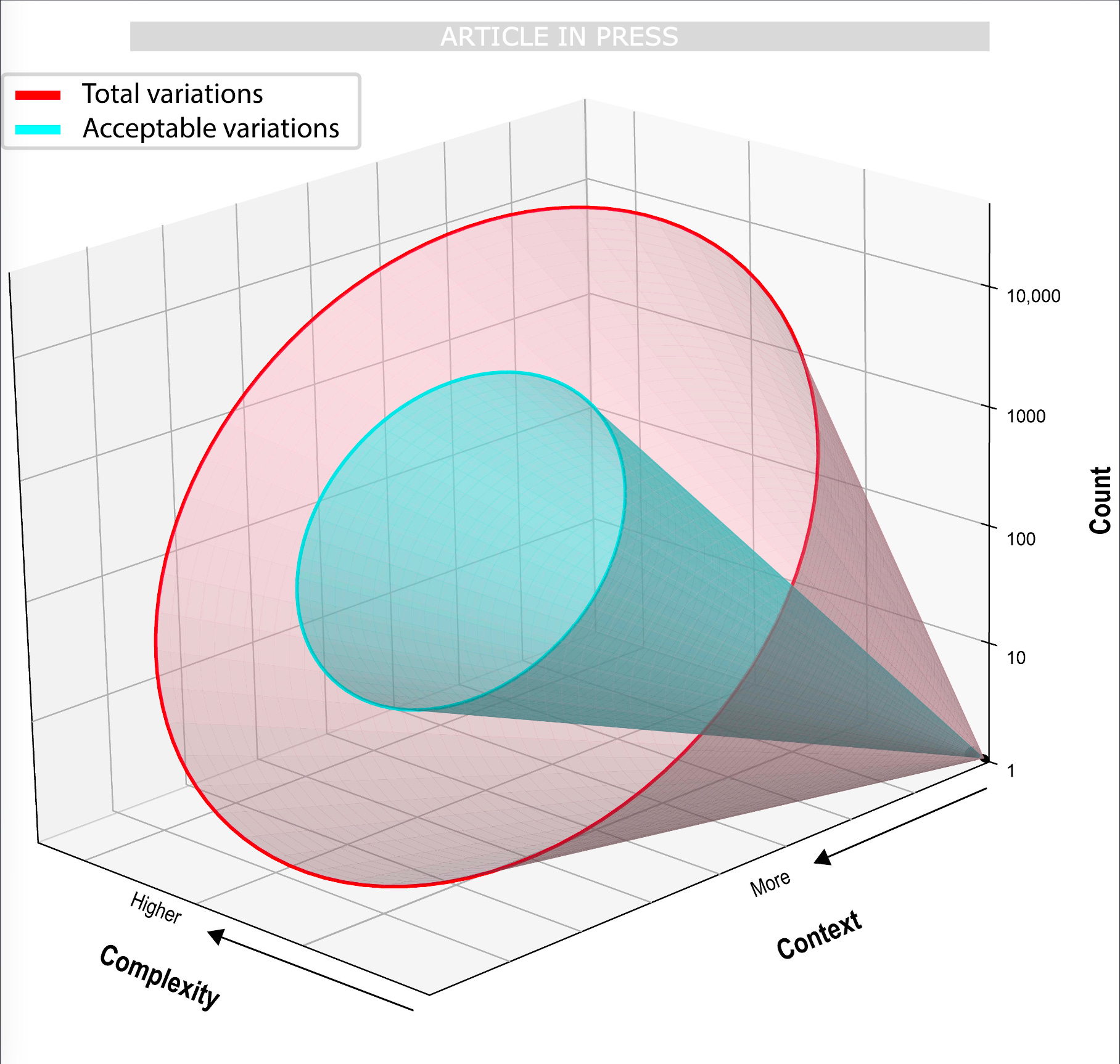
⚖️ [Nature] AI can't fix a system that's already unequal: A solid perspective from LSE Health in npj Digital Medicine that also gives rise to this glorious diagram below. Makes the point that AI doesn't land in a vacuum, it lands in whatever health system you've already got, and if that system is unequal it will happily automate the inequality at scale. A review of 692 FDA-approved AI medical devices showed that <20% reported the age distribution of their study population, 3.6% reported race or ethnicity, and 1% reported anything about socioeconomic status. They also note that most studies generate a single output per question, which for a stochastic* system is a bit like tasting one chip and reviewing the restaurant. Essentially, you can have the best-validated model on the planet but it’s not going reach the people who need it most if the evidence base was built on the wrong population.
* Stochastic = involving random probability. So if you run a stochastic process multiple times with the same data, you’ll get different outputs.
And finally…
💨 We’re all farting twice as much as the texbooks say: Don’t ever say we don’t tackle the heavy journalism here at Healthtech Pigeon. Exactly what you’d expect… an electrochemical sensor clips onto your pants and measures hydrogen in your flatus. Like a CGM, but for intestinal gas. Turns out we all blow out our backside around 32 times a day, roughly double the long-quoted figure of 14, with one participant clocking an impressive 59. Next up is the Human Flatus Atlas (I’m serious), a nationwide US study recruiting Zen Digesters, Hydrogen Hyperproducers and, delightfully, Normal People. Mock all you like, but gastroenterologists haven’t actually had an objective measure of this, and the field's most cited authority on the subject was known as the ‘King of Farts.’ There’s a joke about a throne somewhere but you get the idea.
Pigeon Insider is the upgraded newsletter for those of you who want deep research and to steal fantastic ideas so you can sound incredibly smart in front of everyone else.
Below, is a link to last week’s edition.
It’s inspired by a very long conversation I had with Deborah Cohen (medically qualified, investigative journalist, ex Science Editor at ITV News, ex Health Correspondent at BBC Newsnight, built the investigations unit at the BMJ and author of Bad Influence: How the Internet Hijacked Our Health)
It’s a very deep dive into the absolute sh*t show of B2C healthcare marketing in a world of AI, influencers and criminals. The bad, the very bad and the ugly 👇🏼
Hospitals are fighting deepfakes of their own doctors...

If you’ve been on Instagram recently and had the misfortune of clicking anything to do with GLP-1s, the algorithm now thinks you want one… and along with the companies selling them, that dynamic (dystopian) duo will stop at NOTHING until you get one.
What to listen to 🔊
Jessica from SomX chatted through all the best mental health news from this week with help from Aahuti Rai. FYI… Mind has launched an independent Commission, Mental Health in the Age of AI, and its call for evidence is open to anyone with lived experience of using AI for their mental health, professionals working in mental health or tech, and organisations with a stake in it.
Robert Forbes, Field CISO at SHI, on why agentic AI breaks the traditional non-human identity model, and why healthcare's AI moment is fundamentally different from every other industry's.
Dr Sarah Townley, Deputy Medical Director at Medical Protection, on why clinicians risk absorbing all the legal responsibility for flawed AI-assisted decisions, and what the MPS's new Safer Practice Framework recommends.
Events 📅
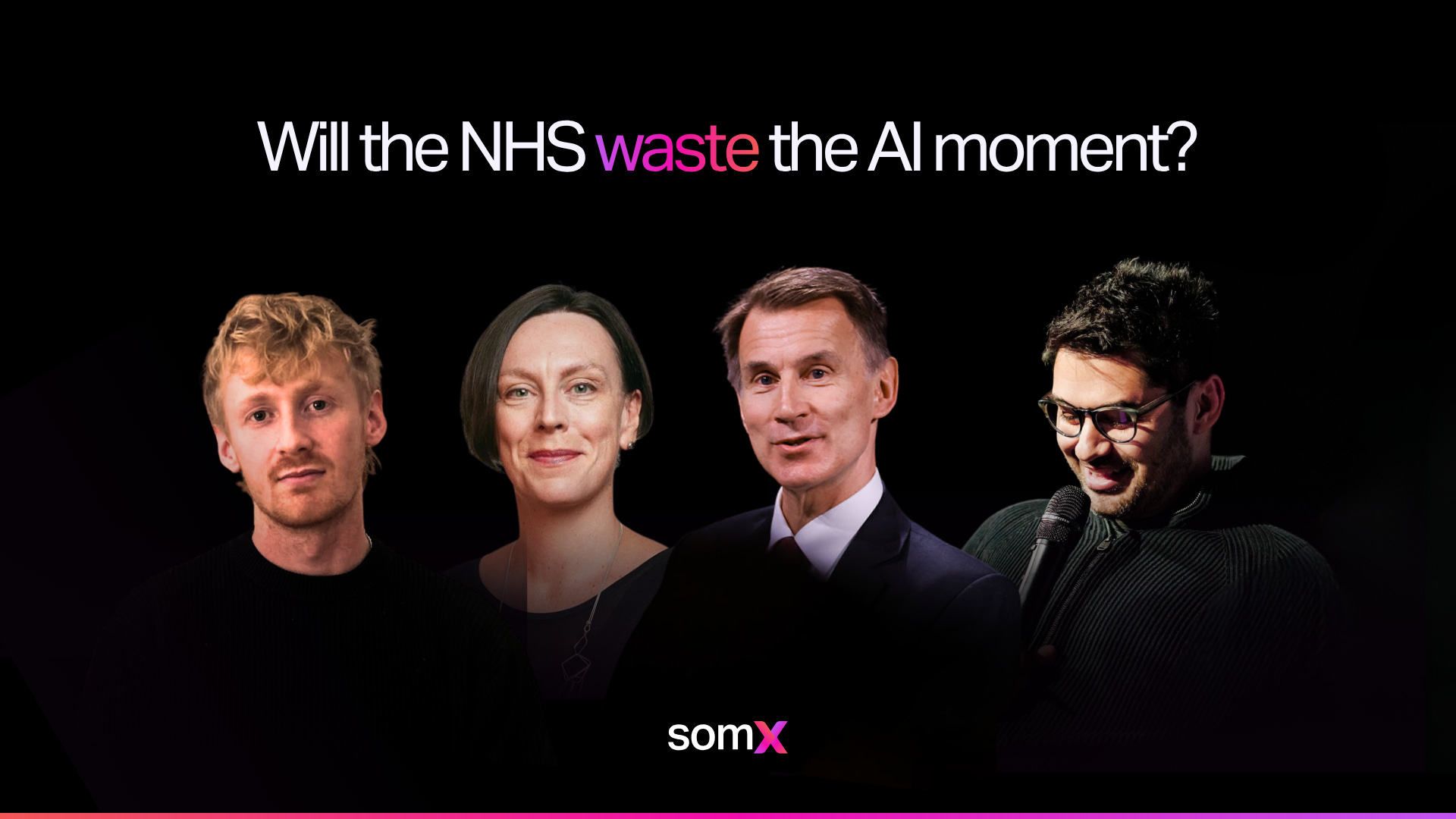
Get ready for this one. Yes, that’s exactly who you think it is…
SomX Healthtech Talks: Will the NHS waste the AI moment?
🗓️ 2 September
🇬🇧 Hale House, London.
We’re back. And this time, we’re bringing the Rt Hon Sir Jeremy Hunt who served as Chancellor, Foreign Secretary and Secretary of State for Health and Social Care. He’s joined by myself (Dr James Somauroo), Tara Donnelly, one of the NHS’s most respected digital leaders and former Chief Digital Officer at NHS England, and Jack Needham, cofounder of Sanctuary Health, bringing AI to the NHS. I want to get to the nub of where AI can tangibly make a difference in secondary care, where it’ll disappoint, and what it’ll actually take behind the scenes for the health service to truly seize the day. Expect Chatham House Rule, real opinions and stories never heard.
HealthVC Summit 2026
🗓️ 2-3 September
🇨🇭 Zurich.
Two days connecting health investors and founders across Europe, China and Saudi Arabia. If you’re raising, this is where the cheque-writers gather.
Mental Health Innovation Showcase, Hale House
📅 15 September
📍 🇬🇧 Hale House, London.
MHIN’s showcase returns to the Harley Street Health District for a full day (noon to 9pm, so pace yourself) of mental health innovation. Given how much of this space still runs on vibes rather than evidence, worth your time.
Life Sciences Week 2026
🗓️ 21-25 September
🇬🇧 Birmingham.
Britain’s national life sciences week, pulling biotech, medtech, pharma, academia and investors into one place. A proper cross-sector convening rather than the usual echo chamber.
LSI Europe ‘26 Emerging Medtech Summit
🗓️ 28 September-1 October
🇪🇸 Grand Hyatt Barcelona.
Europe’s leading emerging-medtech investor summit, matching founders with VCs, PE and strategics. Sunny, well-connected, and squarely aimed at getting deals done.
TechBio UK 2026
📅 13 October
📍 🇬🇧 Kings Place, London.
The BIA’s flagship TechBio conference, uniting biotech, pharma, tech and investment leaders.
Harley Street Health District Conference 2026
📅 20 October
📍 🇬🇧 1 Wimpole Street, London.
A full-day conference from the district becoming one of London’s biggest healthtech hubs.
Visit the SomX events page or subscribe to SomX’s events roundup for everything else.
Opportunities 💰
🩺 Clinical Associate, Hardian Health (Remote, UK only, £45K): See above. Writing clinical evaluation protocols and regulatory submissions for SaMD and AIaMD, reporting into a team that isn’t afraid to publicly disagree with the regulator when the logic doesn’t hold.
💼 Associate Director of Digital Development, Royal Berkshire NHS Foundation Trust: A Band 8d job running digital development at Royal Berkshire, with a £10m+ budget and a brief covering everything from data integration to getting AI actually adopted rather than just piloted. £94k to £109k, based in Reading, closes 11 August.
🤖 AI Implementation Manager, Cambridge University Hospitals: Addenbrooke's wants someone to run multiple AI tools in live clinical use at once.. monitoring performance, spotting drift early, and getting the things embedded in workflows rather than parked in a pilot. Band 8a, £57.5k to £64.7k, closes 17 August.
🤝 UK&I Partnerships Lead, Heidi (London): Heidi’s ambient scribe is already powering two million patient visits a week globally. This role owns the integration and ecosystem partnerships that drive NHS-scale adoption. Wants 4+ years in partnerships or channel, ideally SaaS or healthtech, hybrid with three days in the office.
📣 Want something in front of our 8,000+ readers?
You can break your news as the main story, feature a podcast, job or event... and we even have a few sponsorship packages to choose from...
We review everything editorially - if it is not right for our audience, we’ll let you know - everything has to be valuable to this glorious community.
See you next week, Pigeon fans ✌🏼

Healthtech Pigeon is produced by SomX - the media-led communications and creative agency for healthcare. We help healthtech, biotech, pharma and public sector organisations tell sharper stories through strategy, PR, content, design, events and media production. Built by clinicians, scientists and creatives who know the space. Work with us.